Iron marks and crushed nap can change the look of velvet, velveteen, and corduroy. The safe approach depends on the fabric’s fiber, finish, and care instructions. Check the label and test the full pressing method on a hidden offcut before working on a garment.
Check the material and care instructions#
Velvet, velveteen, and corduroy all have pile, but they are not interchangeable fabrics. Velvet can be made from different fibers and finishes; velveteen is often stiffer with shorter pile, while corduroy’s ribs add another surface direction to consider. A method suitable for one piece may leave a mark or damage another. Do not assume that one iron temperature, steam setting, or pressing cloth works for every pile fabric.
Use an offcut that includes the same layers and seam allowance as the garment. Try the method on the wrong side first, then inspect the face for flattened pile, a shiny patch, an imprint, or a change in color. Follow the fabric and garment care label even when a sewing reference describes a different technique.
Press velvet and velveteen with a padded surface#
The American Sewing Guild’s specialist velvet guidance warns that direct iron contact can leave permanent imprints. It suggests laying velvet or velveteen face down on a padded ironing surface covered with a thick terry towel, a velvet scrap, or a needle board. Hover the iron above the seamline; do not let it touch the pile or the seam-allowance edges, which can imprint through to the right side.
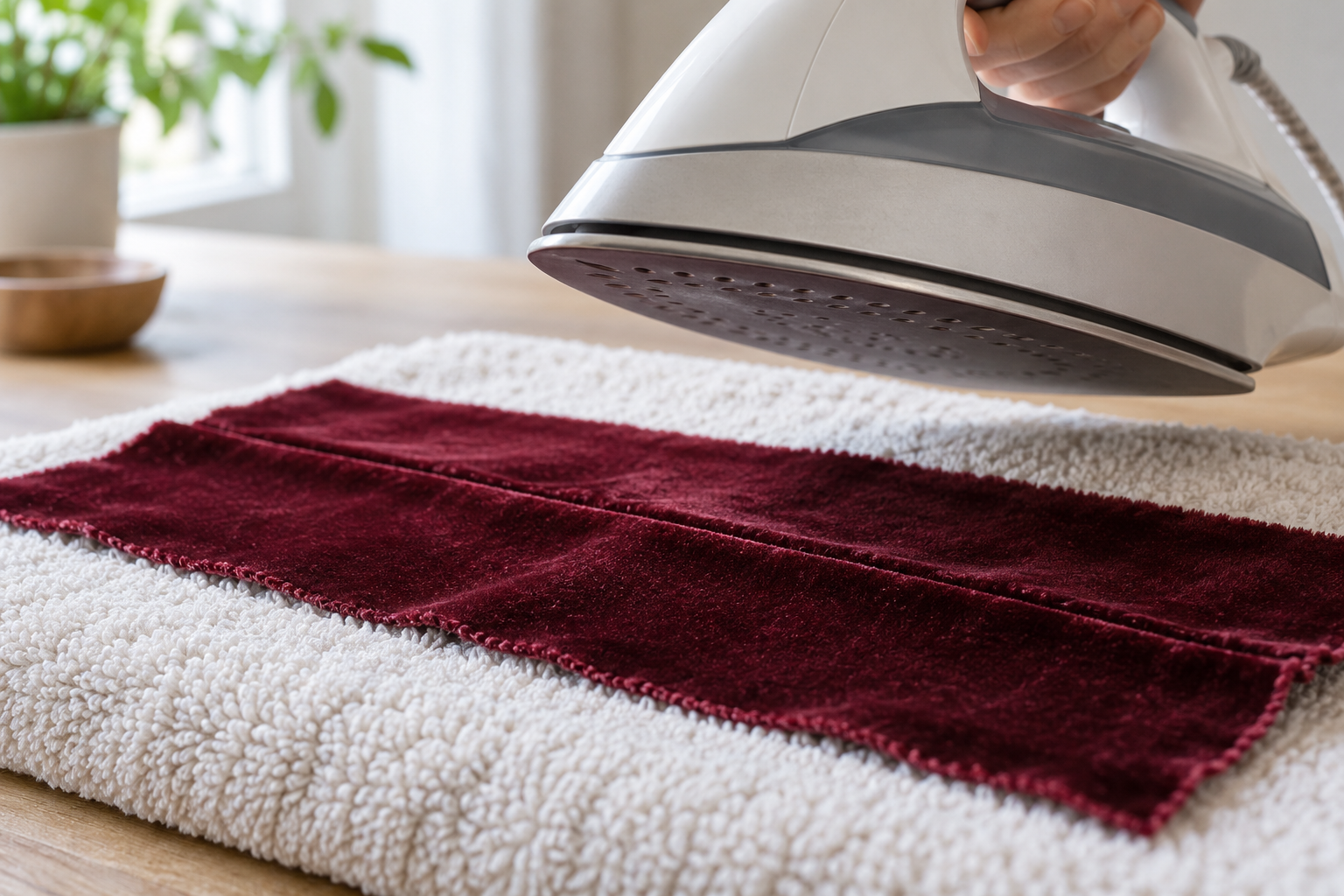
Use a padded surface and follow the material’s care instructions; this illustration shows no iron contact.
That source also describes using steam while keeping the iron above the fabric, and cautions that synthetic fibers are sensitive to heat. Use steam only if the care instructions allow it and the offcut test stays smooth. Stop if the sample loses its pile, develops a mark, or changes sheen.
Treat corduroy advice as a historical example#
A 1961 University of Idaho extension bulletin describes pressing corduroy from the wrong side over a terry towel, following the ribs with a lifting motion and no pressure. The bulletin is historical and does not account for every modern fiber blend or finish. Treat it as an example to test, not as current universal care guidance; the label for your actual fabric takes precedence.
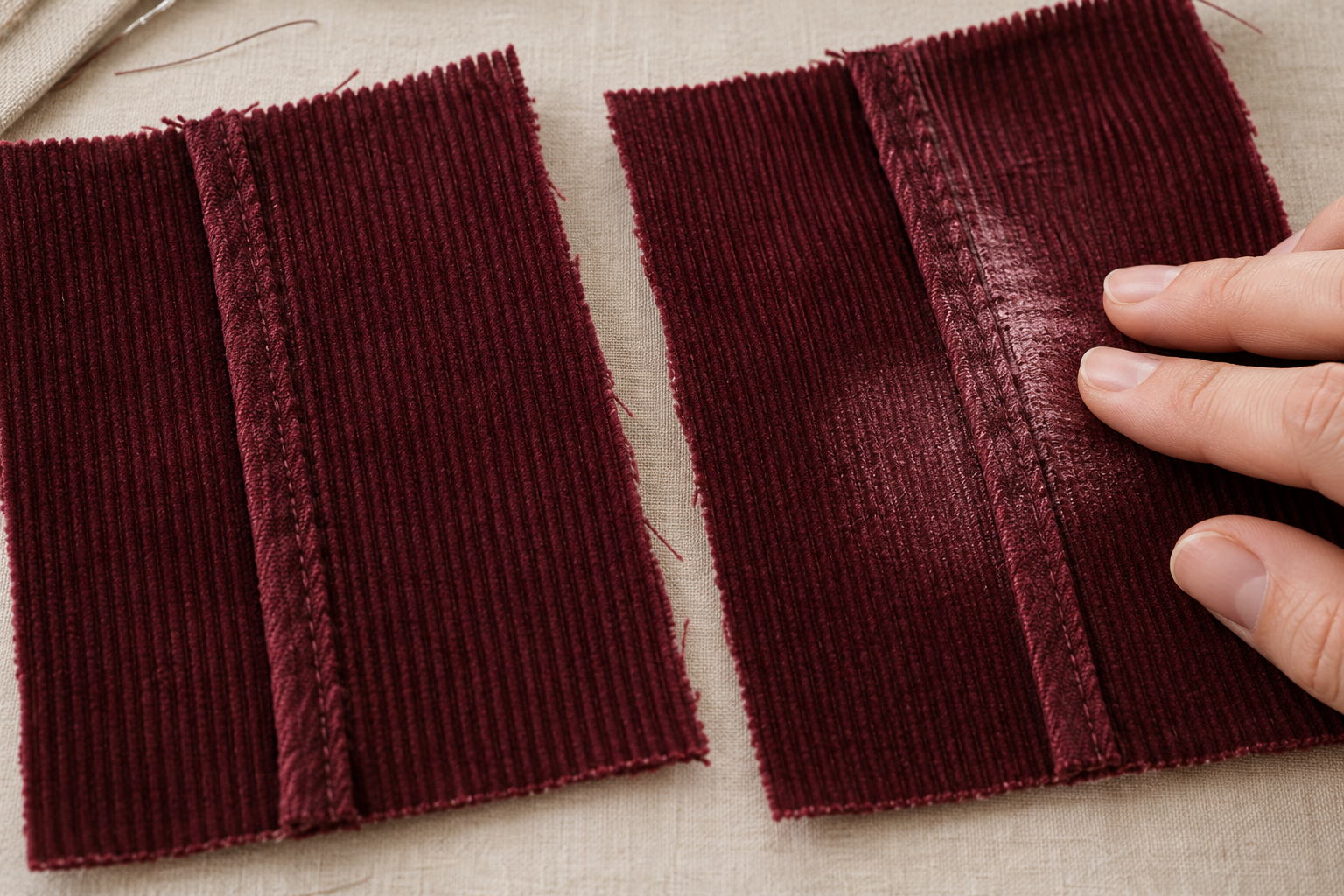
After the sample has cooled, compare its ribs, sheen, and seam impressions with an untreated piece.
If a sample still shows a press mark, avoid repeating that method on the garment. For nap direction, sewing, and feed-control checks, see the guide to velvet, velveteen, corduroy, and other pile fabrics.