Velvet, velveteen, and corduroy have a raised surface, but pile height, backing, drape, and stretch differ. Before choosing a needle or foot, identify the exact fabric and check which way the pile runs. A small test should use the same fabric layers and seam finish as the garment.
Keep nap direction consistent#
Pile direction can change a fabric’s shade and sheen. A University of Idaho extension bulletin identifies corduroy, velvet, and velveteen as pile fabrics and recommends laying out garment pieces in one direction to avoid visibly different-looking panels. That bulletin dates to 1961, so treat its cutting advice as a useful check and confirm the effect with your current fabric: turn a scrap both ways under the same light before cutting.
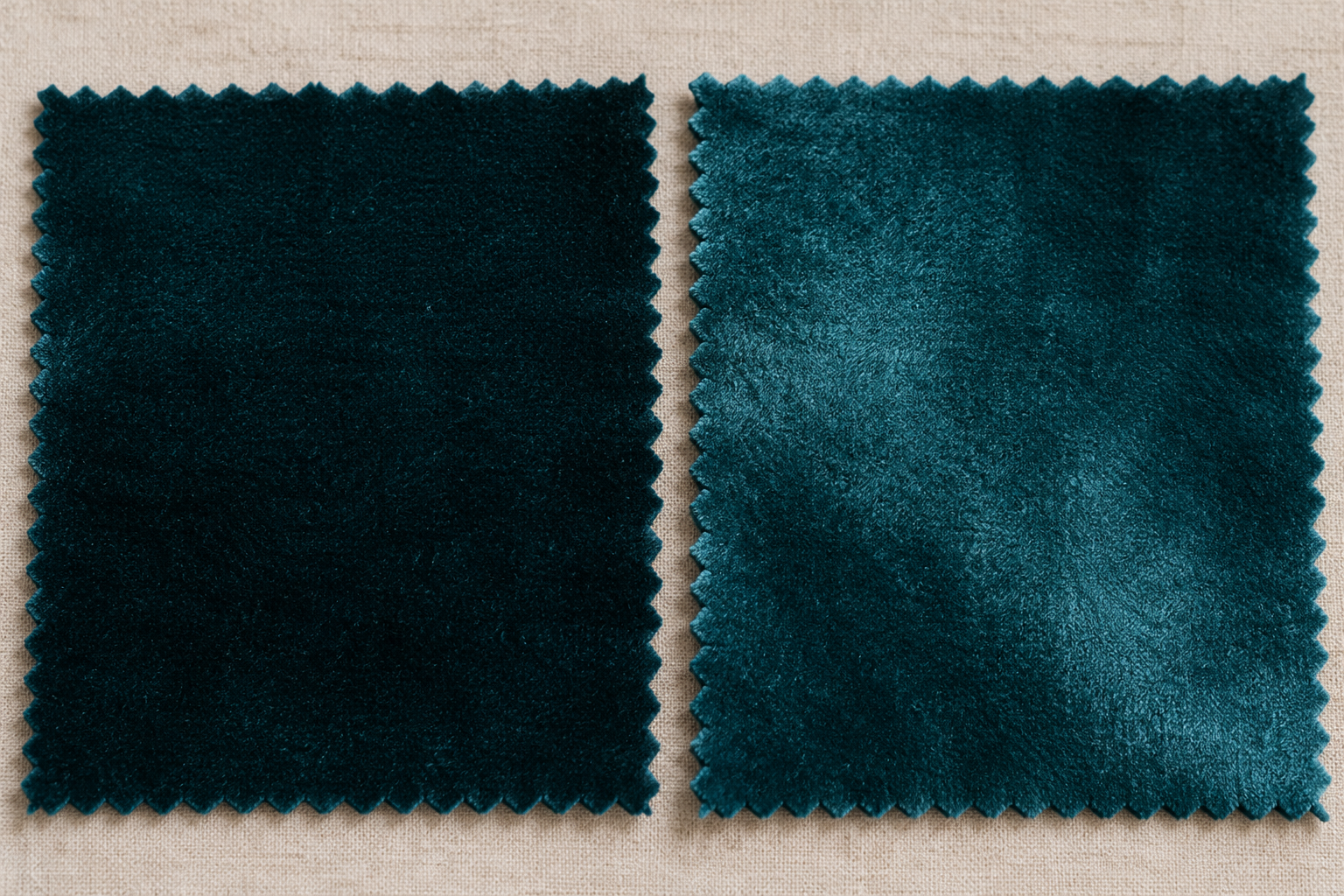
Check both directions on the fabric itself under the same light; the effect varies by material.
Choose a needle example for the exact pile type#
SCHMETZ lists separate needle examples rather than one setting for every pile fabric. Its entries include:
| Fabric named in the SCHMETZ index | Needle examples |
|---|---|
| Velvet | Stretch 75/11 or 90/14; Universal 70/10–90/14 |
| Velvet panne | Stretch 75/11; Universal 70/10–80/12 |
| Velvet burnout | Stretch 75/11–90/14 |
| Velour | Universal 70/10–100/16 |
| Velour jersey | Stretch 75/11 or 90/14 |
These are SCHMETZ examples, not a universal needle chart or a corduroy recommendation. The fiber, backing, pile, thread, and machine’s needle system still matter. Check your manual and the needle maker’s current guidance before sewing.
Check knit pile, including minky#
Some plush fabrics combine a pile with a knit backing, so check stretch as well as nap. Shannon Fabrics identifies Cuddle as its minky brand and says its Dimple style tends to stretch in both directions. Product variants differ; check the actual label and sample instead of applying that example to all minky or pile fabrics.
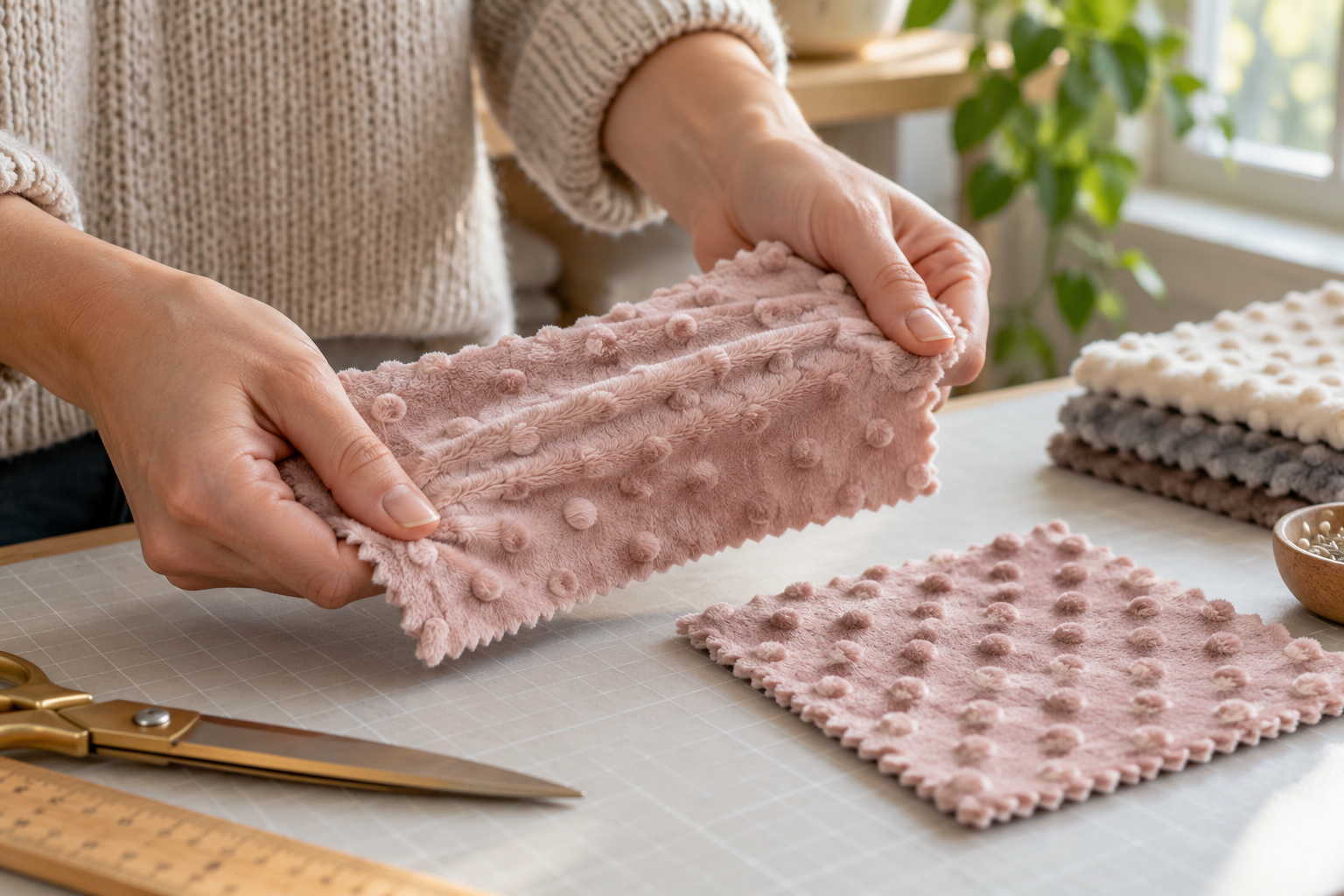
Check the backing’s stretch on a small sample alongside the pile surface.
For Cuddle, the maker suggests double pinning and testing a longer stitch, reduced pressure, a 90/14 stretch needle, a walking foot, polyester thread, or basting spray. Treat these as source-specific sample ideas, not universal settings or compatibility claims. Confirm the needle with its maker and your machine manual; use only feet and controls supported by your model, keep pins clear of the needle path, and change one variable at a time. For a broader stretch and recovery test, see the jersey and stretch guide.
Control shifting without marking the surface#
Pile layers may creep against each other. The older University of Idaho bulletin notes that pins may mark pile and that a presser foot may flatten it; test a hand-basted seam on an offcut to see how your fabric responds. Basting can hold the layers together while you sew, but keep temporary stitches clear of the permanent needle path.
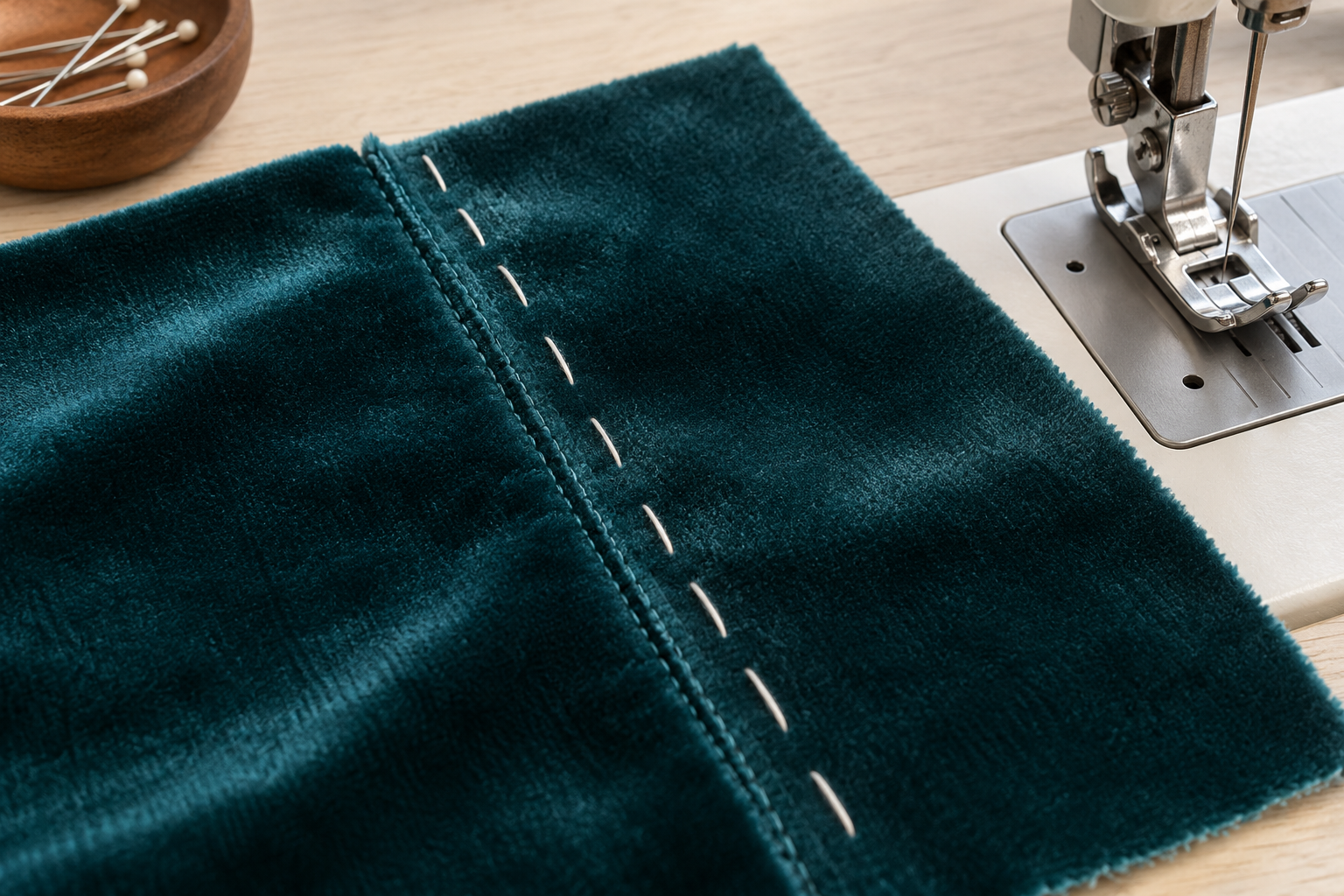
A basted offcut can reveal shifting and surface marks before you decide whether to try a compatible foot.
The American Sewing Guild’s specialist velvet article suggests testing hand-basting and walking, roller, or non-stick feet as possible ways to manage shifting. A walking foot can leave track marks. If that happens in your sample, the article suggests trying tissue above and below the seam allowance. These are options to test, not compatible-foot instructions for every model. Confirm attachments and needle clearance in your exact machine manual, and remove tissue in a way that does not distort the pile.
Do not copy old pressure, tension, or stitch values from a different machine. Change one allowed control at a time on a scrap and stop if the needle deflects, the foot strikes the plate, the pile is damaged, or the layers will not feed without force.
Plan a useful test and finish#
Use a fresh needle and a short seam through the full garment stack. Compare the pile shade in both directions, then inspect for crushed nap, track marks, skipped stitches, shifting, and visible holes. Record the fabric type, nap direction, layers, needle, foot, and result so the setup is repeatable.
For pressing guidance, see how to press velvet and pile fabrics without crushing the nap. For related material questions, compare synthetic suede constructions or interfacing choices by fabric weight and stretch.