“Wool” names a fibre family, not one sewing behavior. A coating, flannel, tweed, knit, and worsted suiting can differ in weave, thickness, stretch, nap, finish, and how a folded seam feeds. Start with the exact fabric and care information rather than a generic wool recipe.
Read woolen and worsted as clues#
Woolen and worsted describe different yarn preparation and fabric character. Woolen cloth is often softer or more textured, while worsted cloth tends to have a smoother, more defined surface. These are useful descriptions, but neither word identifies the whole construction or finish. Check the cut edge, face and back, drape, stretch, and any brushed or raised surface; ask the supplier when the weave or finish is unclear.
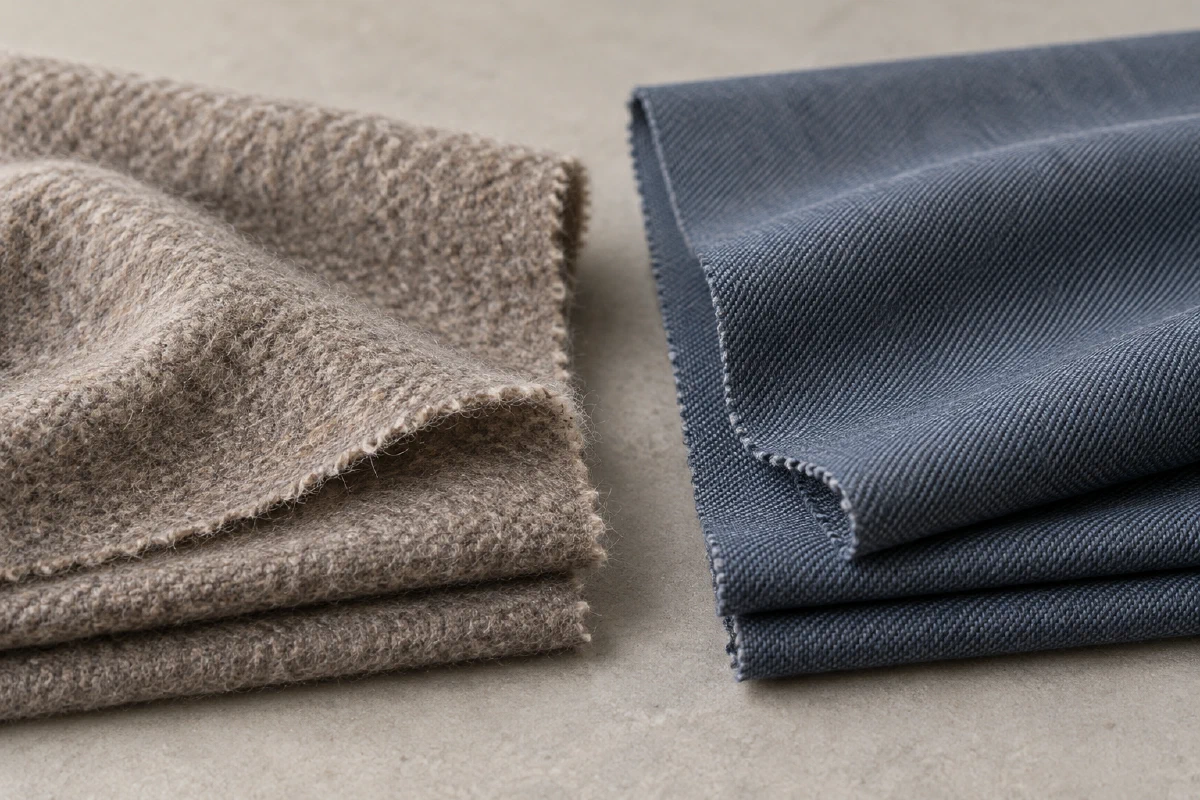
The swatches illustrate surface differences; appearance alone cannot identify a fabric’s full construction or care needs.
Let the care label control preparation#
Before washing, steaming, or pressing yardage, check the maker’s instructions for that fabric. Wool can change through more than one mechanism: relaxation shrinkage releases residual stress, while felting involves fibres becoming entangled under conditions such as moisture, heat, and agitation. These are not interchangeable outcomes, and a “machine washable” or “Superwash” description refers to a treatment family, not one universal process or home-care method. Do not preshrink wool by habit or infer a safe heat setting from fibre content.
Record the label, product name, and any stated treatment. If care is unknown, ask the supplier before applying water or heat. For directional nap, mark the face and keep pattern pieces oriented consistently; a surface that looks even laid flat can shade differently when pieces point in opposite directions.
Test the real seam stack#
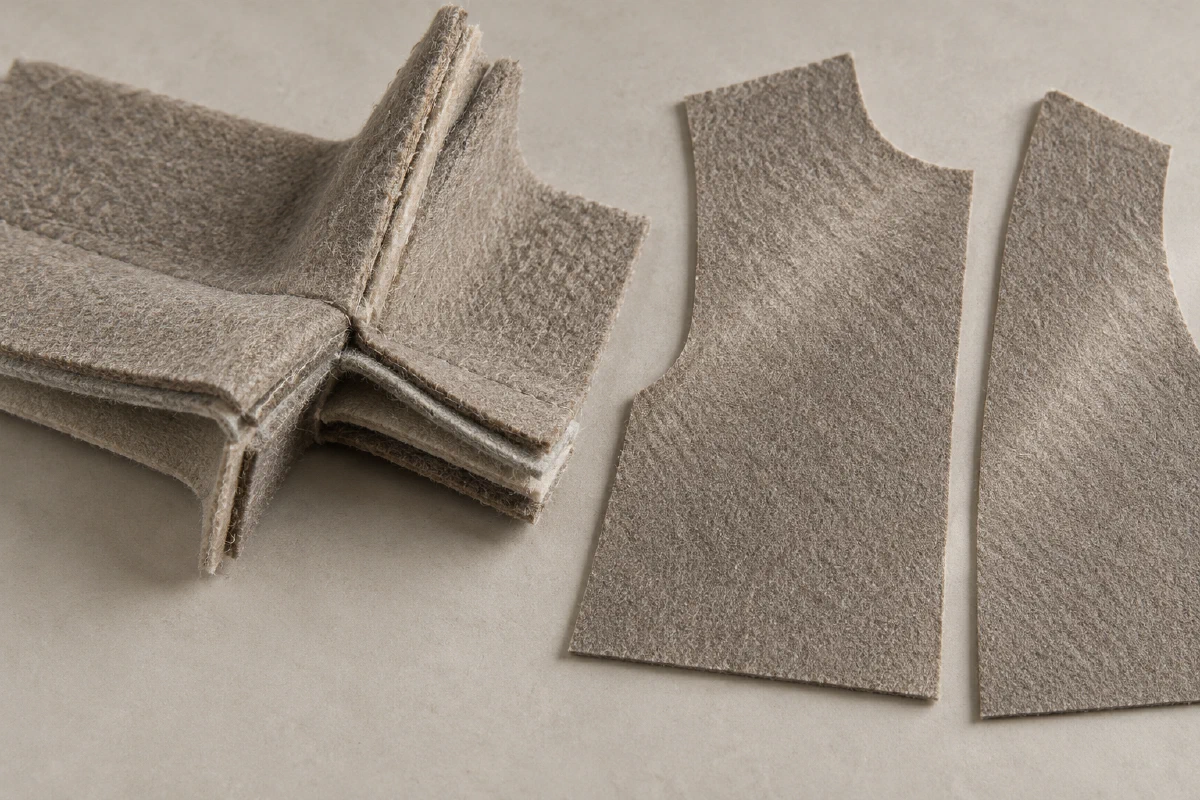
Inspect a seam stack and surface orientation on the actual fabric before cutting the garment.
Build an offcut with the same number of plies, seam allowances, lining or interfacing, and intersections as the garment. Check both the flat seam and its thickest point. Choose a fresh needle and thread that your machine manual supports for the fabric and task, then test a short seam without pulling or forcing the layers. Examine the sample for skipped stitches, damaged yarns, feed marks, distortion, and a seam that behaves poorly when gently flexed.
If the wool is a knit, use the jersey and stretch guide for stretch and recovery checks. For a dense intersection, compare it with the multiple-layer seam test. Keep pressing and seam-finish choices tied to the exact care label and garment construction; this guide does not set a universal wool needle, stitch, steam, or washing method.