Interfacing helps support a garment area, shape an edge, or limit stretch. The right choice depends on more than a fabric name: consider the fabric’s weight, care, woven or knit construction, the garment area, and how much softness or movement you want. This is a garment-construction choice; it does not set the sewing machine’s needle, stitch, foot, or layer capacity.
Compare representative choices#
New Mexico State University Cooperative Extension groups common garment fabrics by weight and construction. Its examples can help narrow a search, but they are not an exhaustive catalog or a recipe for every modern fabric.
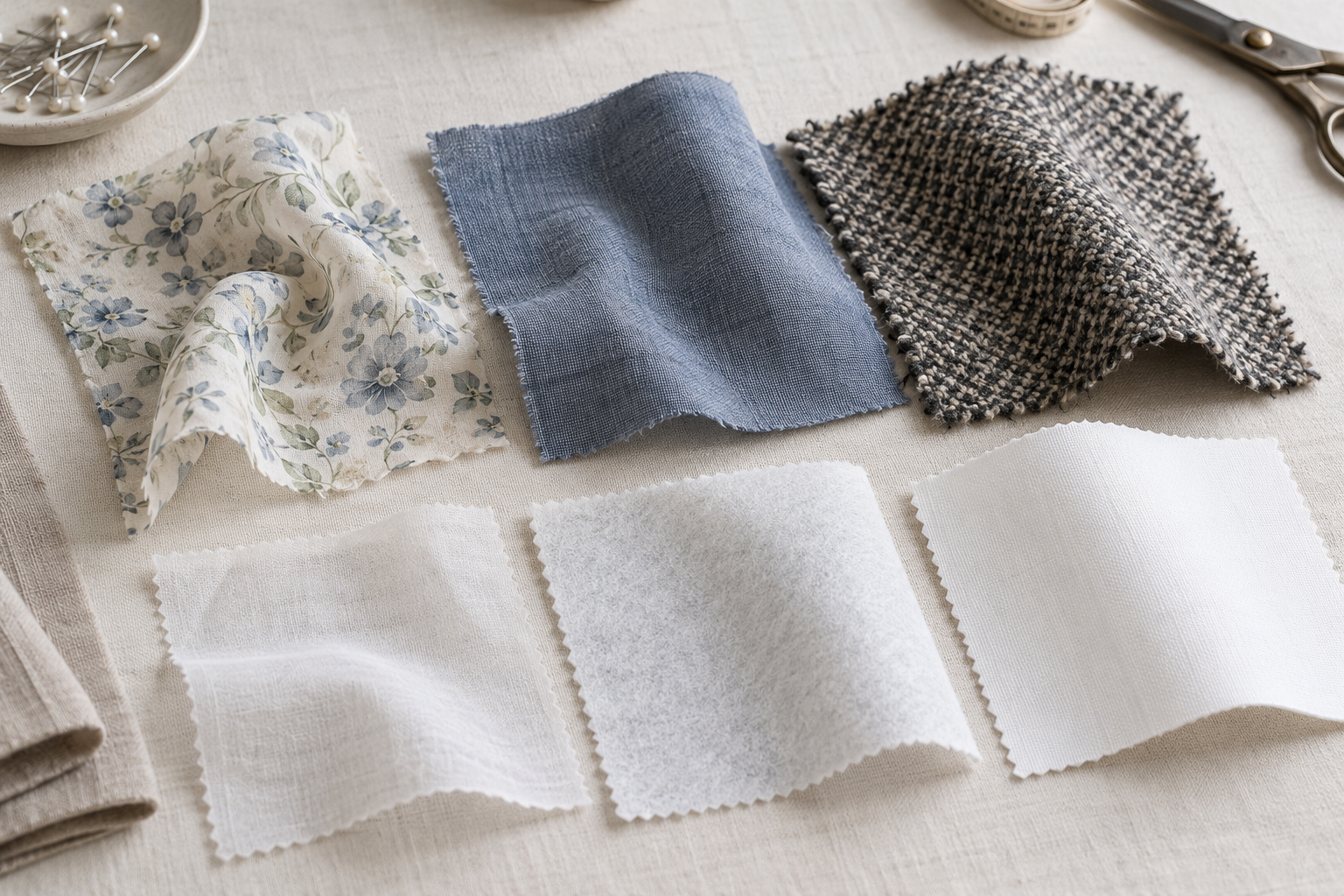
The swatches illustrate differences in weight and structure, not a one-to-one matching chart.
| Garment fabric group | Representative interfacing examples in the guide | What to check in your project |
|---|---|---|
| Very light to lightweight fabrics, including sheers, cottons, silks, blends, and synthetics | Lightweight interfacing, with soft or crisp options | Check whether the support changes drape, opacity, color, or the hand of the fabric. |
| Medium-weight fabrics, including denim, flannel, linen, wool, cotton, silk, and synthetics | Medium-weight interfacing, with woven, nonwoven, hair-canvas, or iron-on examples | Compare the garment area and desired firmness; a fabric category alone does not choose the finish. |
| Heavyweight fabrics, including corduroy, tweed, brocade, wool, cotton, and linen | Medium- or heavyweight interfacing, including nonwoven, hair canvas, canvas, or iron-on examples | Check the combined thickness and whether the supported area still folds and moves as intended. |
| Knits and jerseys | Lightweight or medium knit, woven, or nonwoven examples, including stretch types | The guide describes interfacing where stretch is unwanted or a shape needs support. Choose a product that preserves the movement the garment needs. |
| Leather, suede, and synthetic leather | Woven or nonwoven interfacing, muslin, or hair canvas | This is a broad group. Identify the actual backing and test the finished combination; see synthetic suede construction. |
The table reflects examples in NMSU Guide C-208, not an endorsement of a particular current product. A woven support can restrict stretch, while a stretch interfacing may preserve more movement; check the product’s own fabric and care guidance.
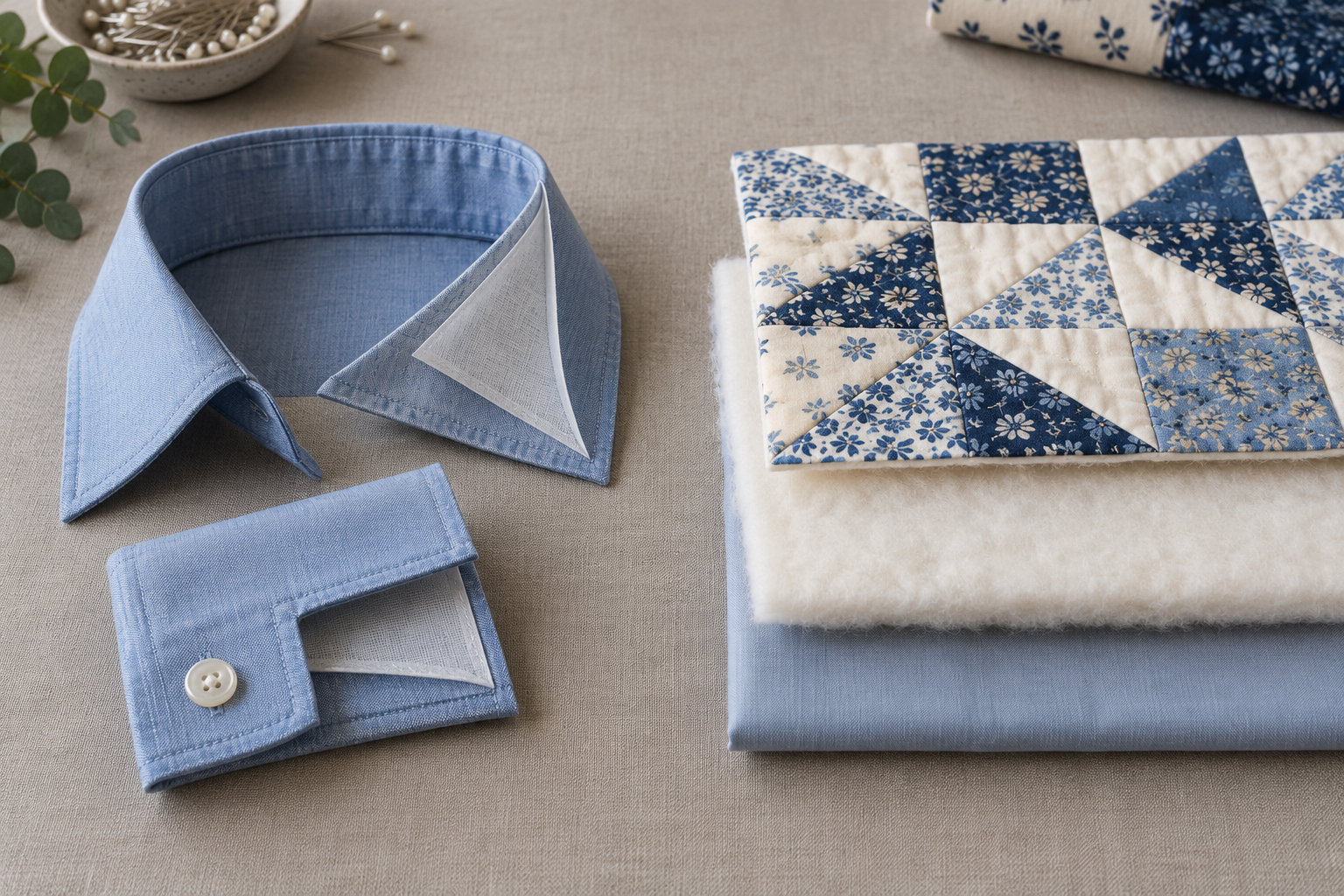
Garment interfacing supports a garment area; quilt batting is the middle layer of a quilt sandwich.
Keep garment interfacing separate from quilt batting. Hobbs describes its Heirloom Premium 80/20 Fusible as an iron-on batting intended to attach a quilt top and backing to the batting. That named quilt-sandwich product is not a substitute garment interfacing. Choose a support labeled for the garment area’s purpose and movement, and follow its own instructions. For the separate batting decision, see the fleece, batting, and quilt-layer guide.
Match care, purpose, and the actual material#
NMSU recommends considering the garment fabric’s care method when selecting interfacing and using similar care procedures for both. Follow the labels and instructions for the specific fabric and interfacing. Before applying support to the project, test it on a matching offcut using the product maker’s directions. Check the face of the fabric, color, shrinkage, stiffness, stretch, and recovery after the sample is treated as the garment will be treated.
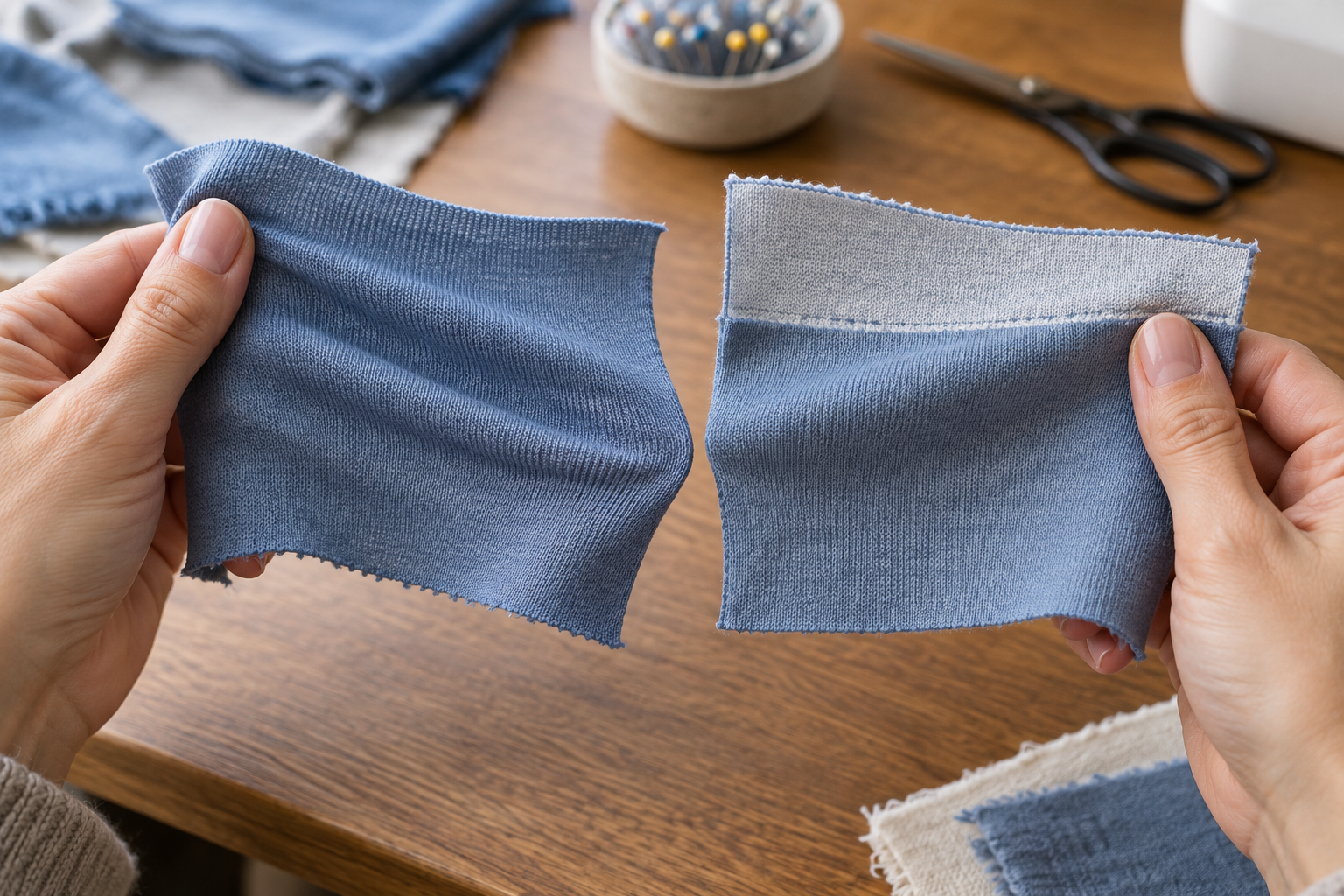
A paired sample can help compare hand and movement; the product directions and garment’s care needs still control.
The purpose of the garment area matters too. A collar, cuff, placket, waistband, and a soft knit bodice need different support and movement. A sample can show whether the interfacing gives enough shape without making the fabric too firm or preventing the needed stretch. If a fusible product is not identified as suitable for that fiber, surface, or construction, do not assume it will bond safely.
Interfacing adds another layer to a seam. Test the same interfaced stack that you plan to sew, using only needle, stitch, and foot choices allowed by your machine manual. If the machine cannot feed the stack smoothly or the needle deflects, stop and choose a thinner support or a different construction.
For specific sewing behavior, see the guides to jersey and stretch fabric, slippery lightweight fabric, and coated material.