“Faux suede” describes a surface, not one backing or seam behavior. Some synthetic suedes are nonwoven; others have a woven or knitted cloth base under a napped surface. Turn the fabric over, inspect a cut edge, and check the product label before you choose a seam. For coated faux leather or vinyl, see the coated-material guide.
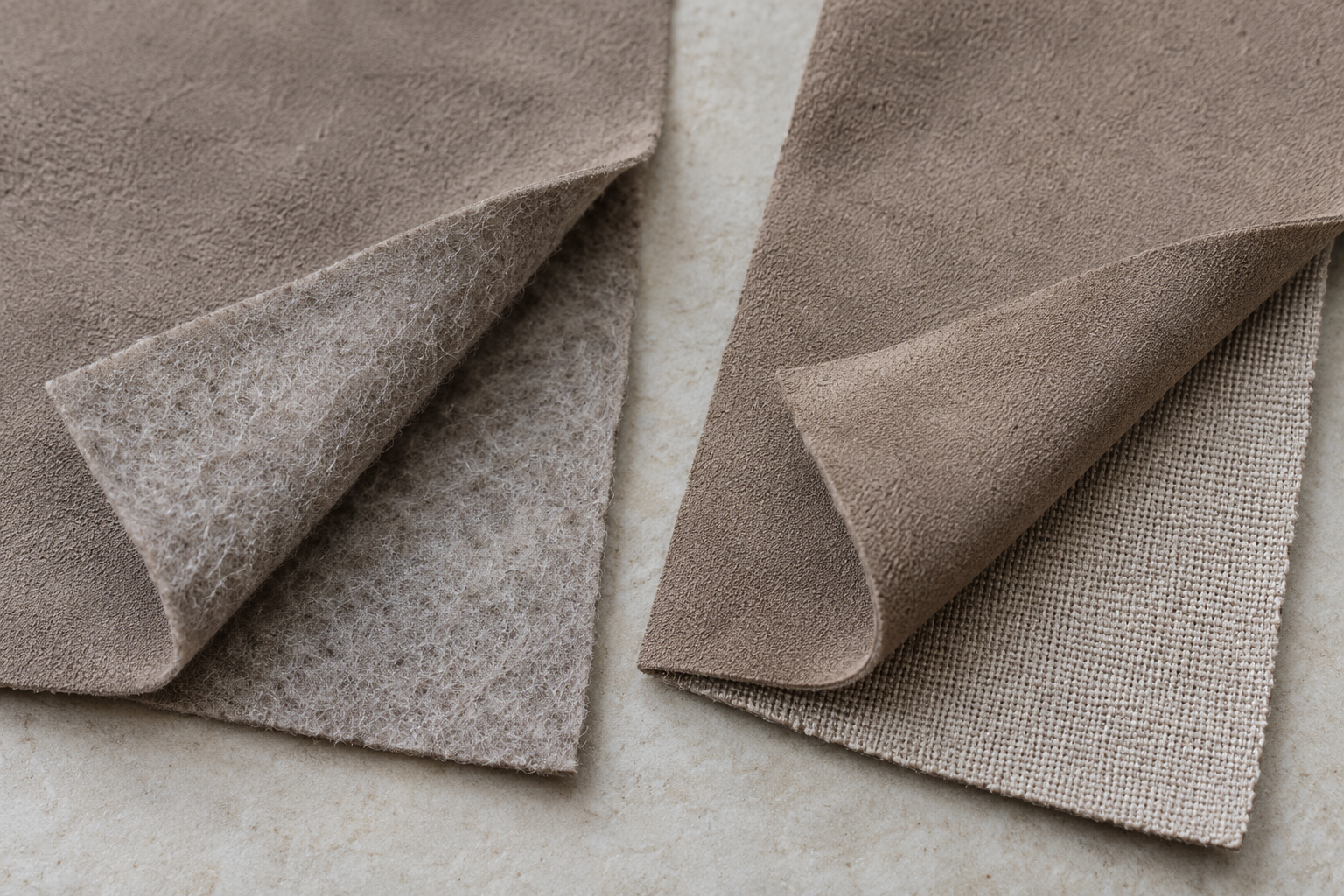
These are examples of different backing constructions; inspect the actual fabric rather than relying on its shop label.
Choose construction for the backing#
New Mexico State University Cooperative Extension’s guide distinguishes the two constructions. It says woven- or knit-backed suede-like fabrics can ravel and use conventional seams. Nonwoven suede may use conventional seams or flat/lapped construction. Those are representative garment methods, not an instruction to use one seam on every synthetic suede; consider the garment design, seam finish, fabric weight, and how the actual edge behaves.
The guide also describes medium-weight examples as relatively crisp and lightweight drapable examples as better suited to gathers, pleats, or tucks. Treat those as clues, not pattern rules. A fabric’s own drape and recovery should guide the project.
Test the full seam stack#
NMSU recommends sampling a seam with two or more layers. That is a way to observe the actual seam, not a maximum layer count or proof of machine capacity. Use an offcut with the same backing, nap, thread, seam allowance, and number of layers as the project. Check for raveling, shifting, skipped stitches, enlarged needle holes, or a seam that feels too stiff.
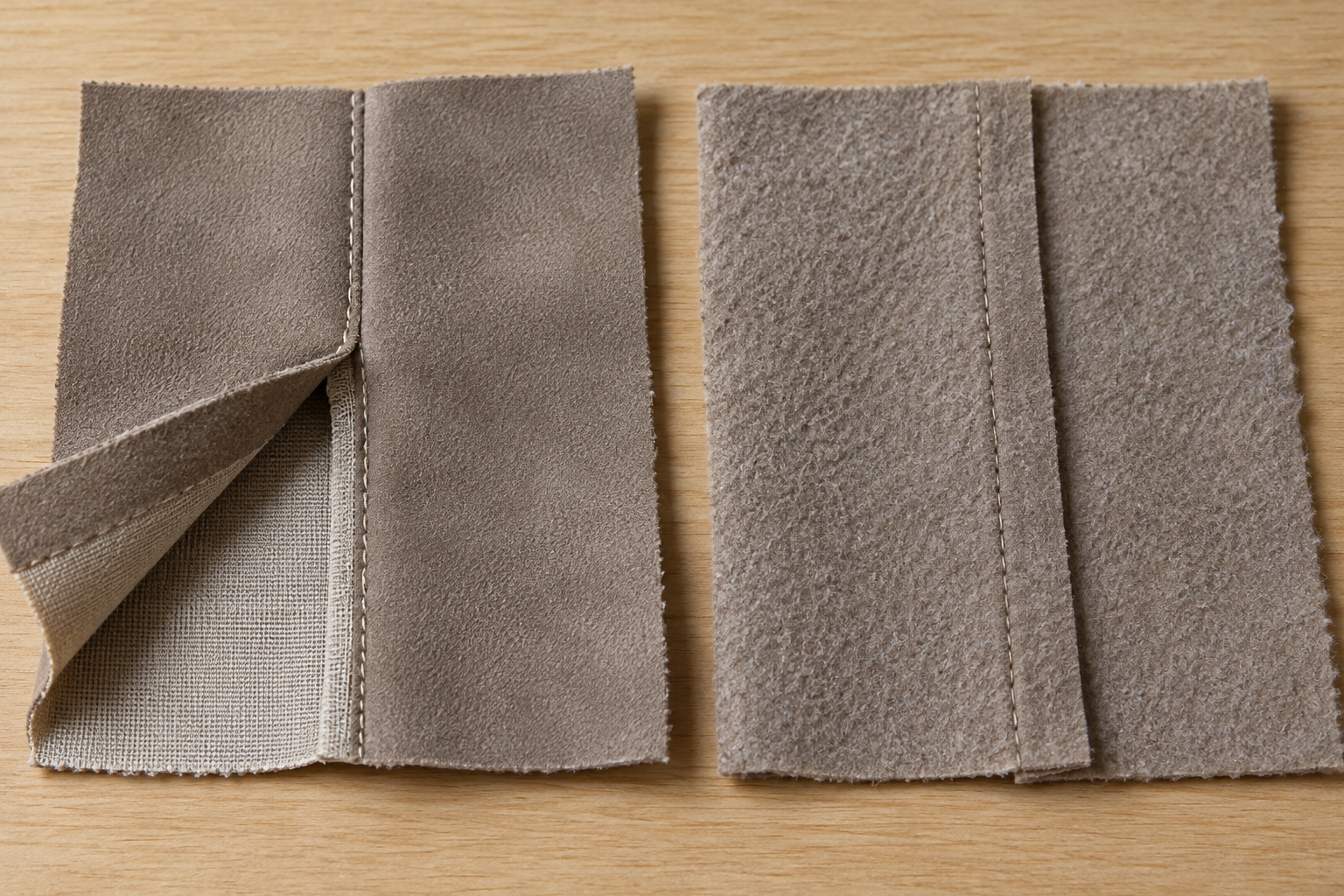
These seam samples illustrate options to compare; the actual backing, garment, and source guidance determine what to test.
The guide describes possible changes to presser-foot pressure, feet, needle or plate choices, and upper-thread tension. It is a 2016 extension publication and does not identify current machine models or compatible settings. Do not transfer those adjustments to a present-day machine without checking its exact manual. Keep the material steady as it approaches and leaves the foot without stretching it; if layers creep, hand-baste a sample and see whether it improves the seam.
Before trying an unfamiliar accessory, stitch plate, or needle, verify compatibility in the machine manual. Stop if the needle deflects or contacts the plate, if the fabric is damaged, or if the stack will not feed without force. When a seam on the sample still looks poor, consider a different seam construction rather than forcing the material through.
Consider interfacing separately#
An interfacing choice concerns garment support and desired movement; it does not establish a machine setting. NMSU’s general table groups leather, suede, and synthetic leather together, but that grouping does not distinguish the different synthetic-suede backings. See choosing interfacing for fabric weight and stretch and test the specific fabric, interfacing, and care method together.