Cork fabric is commonly a composite sheet: a cork face is bonded to a textile backing, but the backing, bond, thickness, and flexibility vary by product. It is not the same material as solid cork, flooring cork, or animal leather. Before choosing a seam, identify the actual face and backing and read the supplier’s instructions for the exact product.
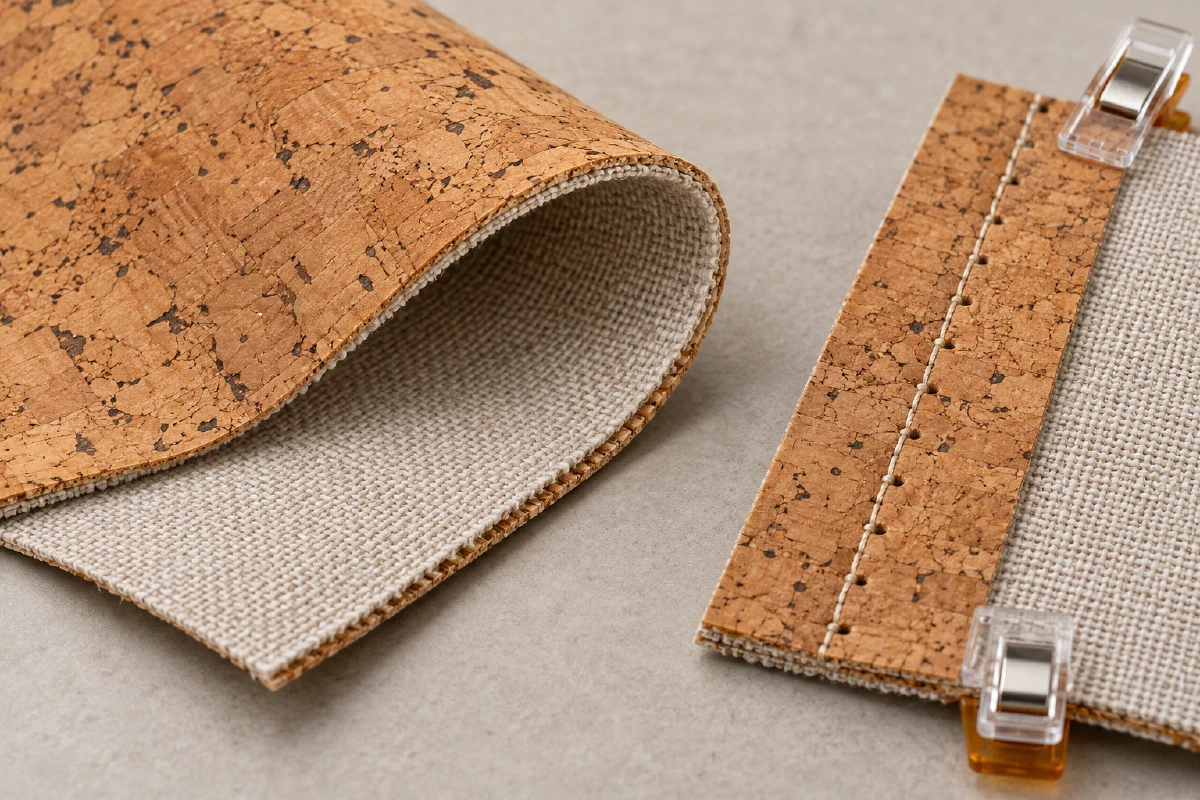
This is one illustrative composite construction. Check the cut edge and product information for your own material.
Inspect what the fabric name leaves out#
Look at the cut edge and both faces. Note whether the backing is woven or knit, how the cork surface is attached, how easily the sheet bends, and whether the seam allowance frays, delaminates, or shows punctures. A decorative cork surface does not tell you how a needle hole will look or whether the backing will carry the seam. The stitching itself may remain visible after the fabric is unpicked, so plan the sample around the project’s final appearance.
Ask the supplier for the product name or SKU, backing description, care limits, and any supported needle or foot guidance. A supplier’s successful test on an unspecified machine or fabric cannot establish compatibility with your material stack.
Test a complete sample before committing#
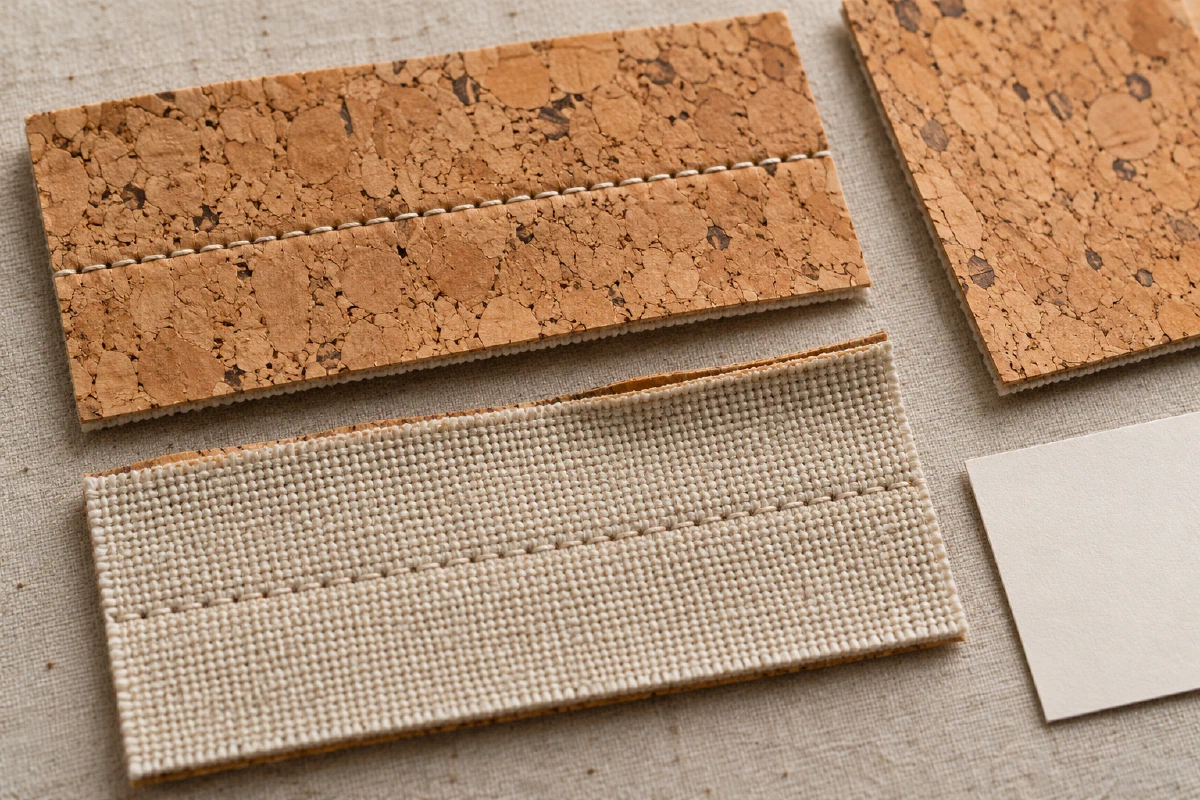
Inspect both sides of the actual sample; the illustration does not set an acceptable hole or strength threshold.
Make an offcut using the same number of layers, seam allowance, edge treatment, and any fold or reinforcement planned for the project. Hold layers with a method allowed by the product and machine; clips can avoid adding pinholes, but keep them outside the needle path. Check whether the backing shifts and whether the cork face cracks, wrinkles, or shows every stitch hole. Sew only with a needle, thread, foot, and stitch your exact machine supports, and let the feed move the sample without force.
Inspect the seam from both sides and flex it as the finished item will be used. A tidy-looking short seam is not a load rating, a waterproofing test, or proof that every cork composite is machine-sewable. If holes or distortion are unacceptable, change the design or ask the product maker about a suitable construction method rather than adding more passes to the same damaged line.
For other coated materials, compare the backing and surface checks for vinyl. If the main uncertainty is how heavy or thick the composite is, use the separate weight and fabric-hand guide.