Waxed canvas combines a woven base with a finish that can affect surface handling, marking, care, and feeding. “Canvas” alone does not identify the wax, backing, weight, or finish condition. Check the supplier’s instructions for the exact product before pressing, washing, cleaning, or changing the finish.
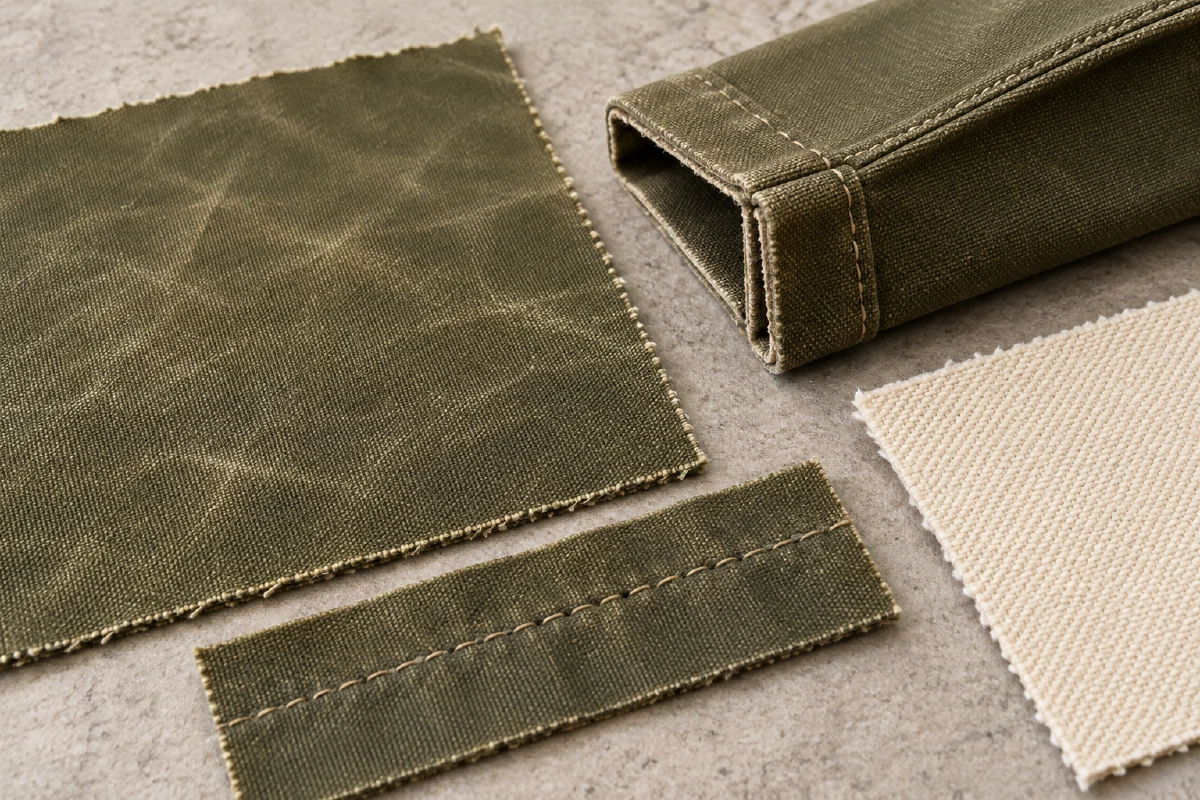
Use a matched offcut to inspect the finish and the thickest seam; the illustration is not a heat or cleaning method.
Check the finish before testing#
Record the maker, product name, stated weight and finish, face and back, care limits, and any recommendation for marking or holding layers. Waxed-canvas suppliers do not give one interchangeable set of instructions: published guidance can differ on pressing, marks, and whether sewing leaves residue. One supplier’s result applies to its described canvas and process, not every waxed fabric.
Avoid assuming that an iron, hair dryer, solvent, or cleaning method is safe. A finish may show creases, pressure marks, needle holes, or abrasion differently from ordinary uncoated canvas. If the product maker does not give a clear instruction, ask before applying heat or altering the surface.
Match the sample to the bulky point#
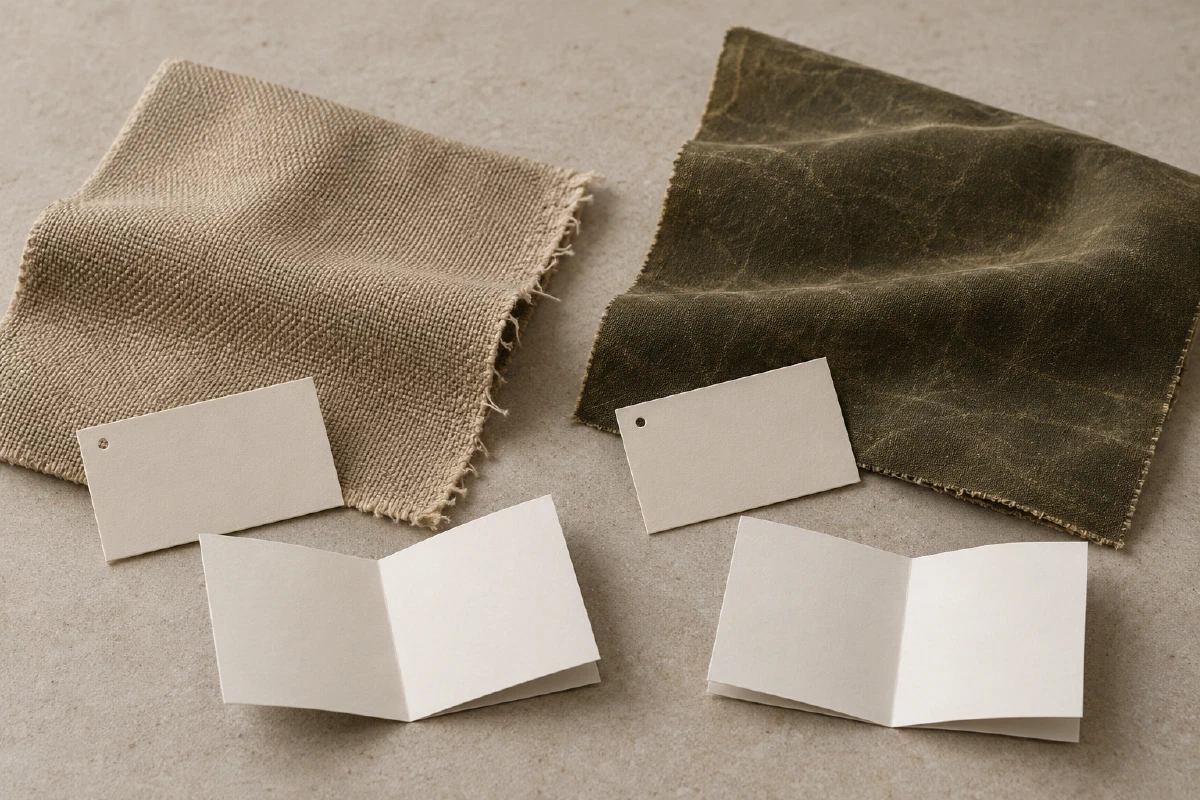
Record the exact product and follow its own care information; the samples are illustrative.
A flat swatch will not show how the canvas behaves where a strap, folded hem, seam allowance, or crossing seam adds layers. Prepare a test with the same material, seam construction, thread, and any reinforcement planned for the project. Use a needle, foot, and stitch that your exact machine manual supports. Check whether the layers feed evenly and whether the needle leaves visible marks, the wax builds up, or the surface changes. Stop if the machine resists, the needle deflects, or the sample is damaged; do not push the stack through.
Inspect both sides of the seam after sewing, and decide whether any marks or changes are acceptable for the finished item. A successful seam sample shows only that this setup formed a seam on this sample. It does not establish a water barrier or a safe thickness for another machine. For a plain-denim comparison, see the thick seam and hem guide; for claims such as “water-resistant,” compare the distinct water and moisture test endpoints.