A fabric listing that says “neoprene” or “scuba” does not fully describe the sheet in your hands. The name alone does not establish whether the exact product has compressible foam, a knit face or backing, bonded layers, or a combination. Inspect the cut edge and confirm the product construction with its supplier rather than treating either term as a construction standard.
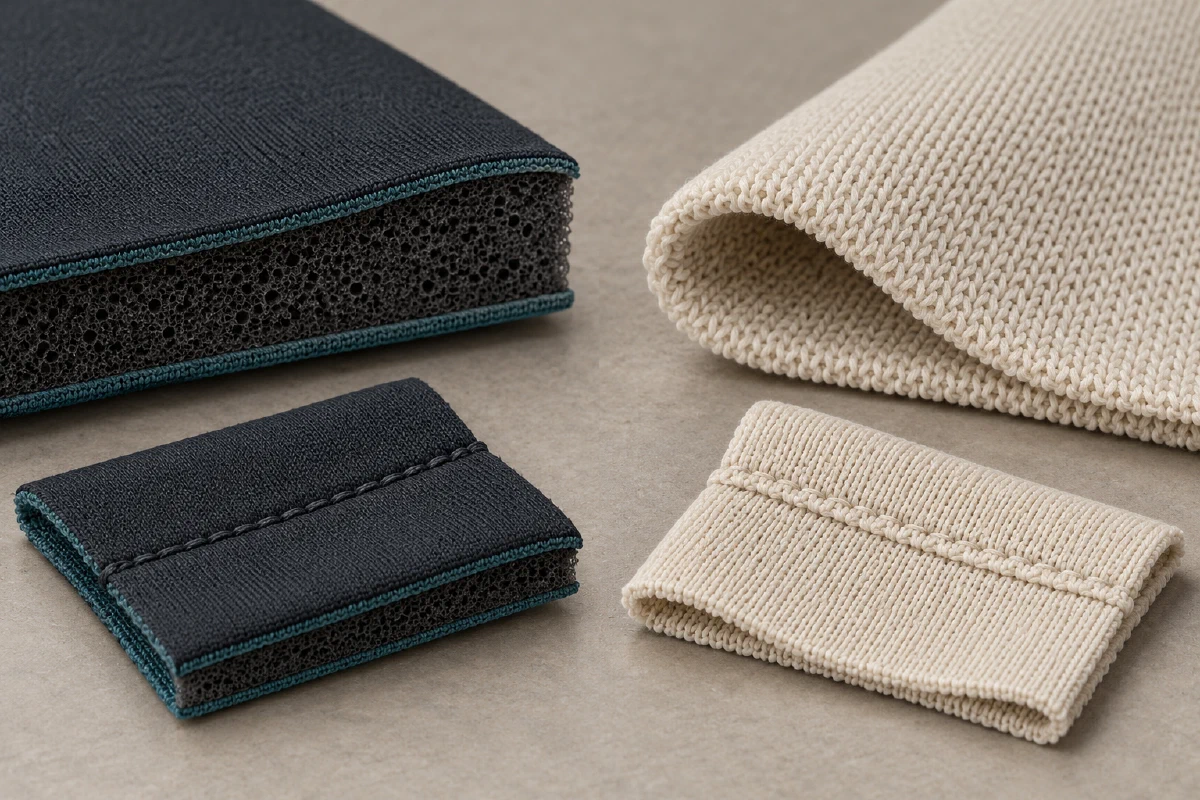
These are possible construction examples, not a universal classification of products sold as neoprene or scuba.
Identify the layers and intended use#
Record the maker and SKU, stated fibre content, thickness, stretch direction and recovery, face and backing, and care limits. Inspect an offcut edge for foam, knit backing, laminated faces, or an adhesive layer. Ask the supplier what the product is designed for and whether it has special seam or care instructions. A consumer sewing example and a manufacturer’s own wetsuit construction describe different materials and equipment; neither is a universal home-machine recipe.
Test only the ordinary garment seam#
If the exact machine manual supports the needle, thread, foot, and stitch for this material and stack, make a short sample with the same number of layers and folds as the garment. Watch for compression, feed distortion, skipped stitches, cut yarns, delamination, or a seam that will not stretch as the garment requires. Do not pull the material to make it feed, and stop if the machine resists or the needle deflects. A flat sample does not establish that the thickest intersection is within the machine’s limits.
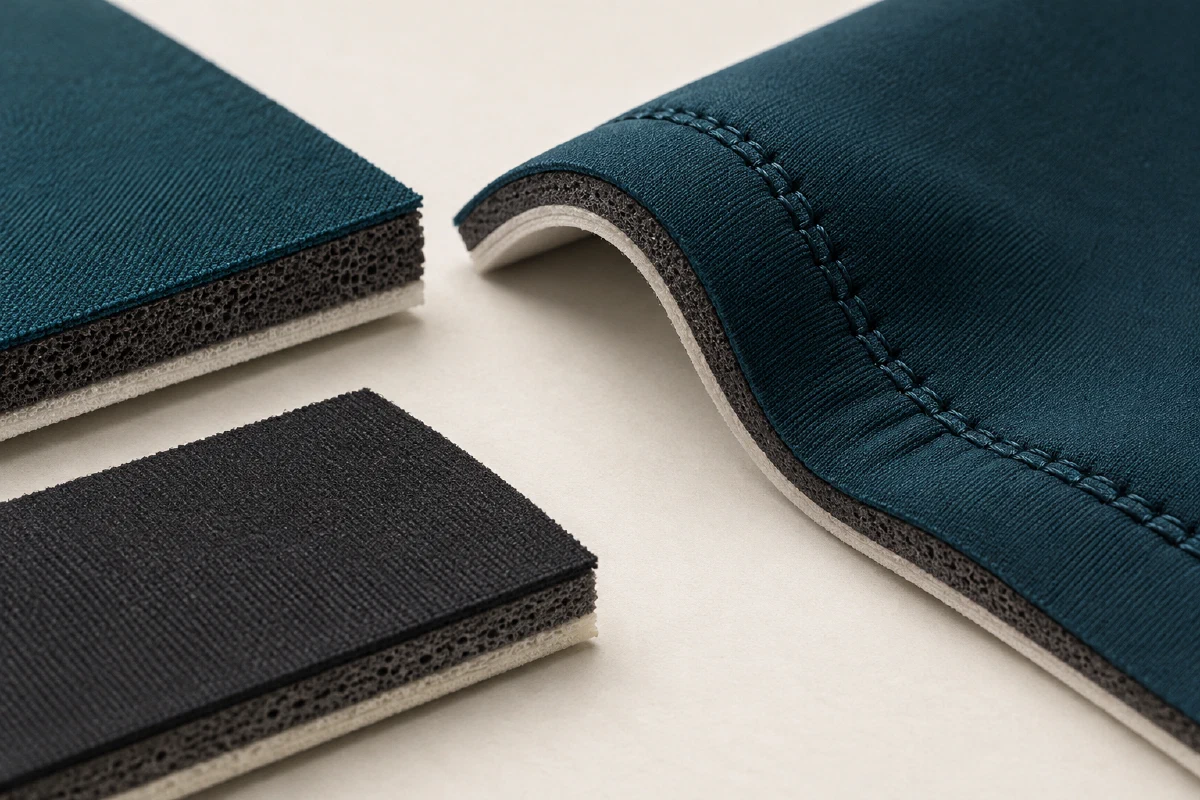
Inspect material movement on the matching product; this illustration does not show a waterproof seam.
An ordinary stitched garment seam does not prove resistance to water entry. Specialized neoprene products may use construction methods such as multi-needle seams or separate sealing processes that a household zigzag or twin needle does not reproduce. If the project depends on a waterproof seam, follow the product maker’s system or use a qualified service; do not improvise an adhesive or sealing recipe.
For a stretch-seam sample, see the jersey guide. To compare a liquid-barrier claim with a sewn seam, read the water-performance guide.