“Water-repellent,” “waterproof,” and “breathable” are not one test result. Before comparing fabrics, decide whether you care about water wetting the face, liquid passing through the fabric, moisture moving within it, water vapor crossing it, or air flowing through it. Ask which sample and test method support the claim.
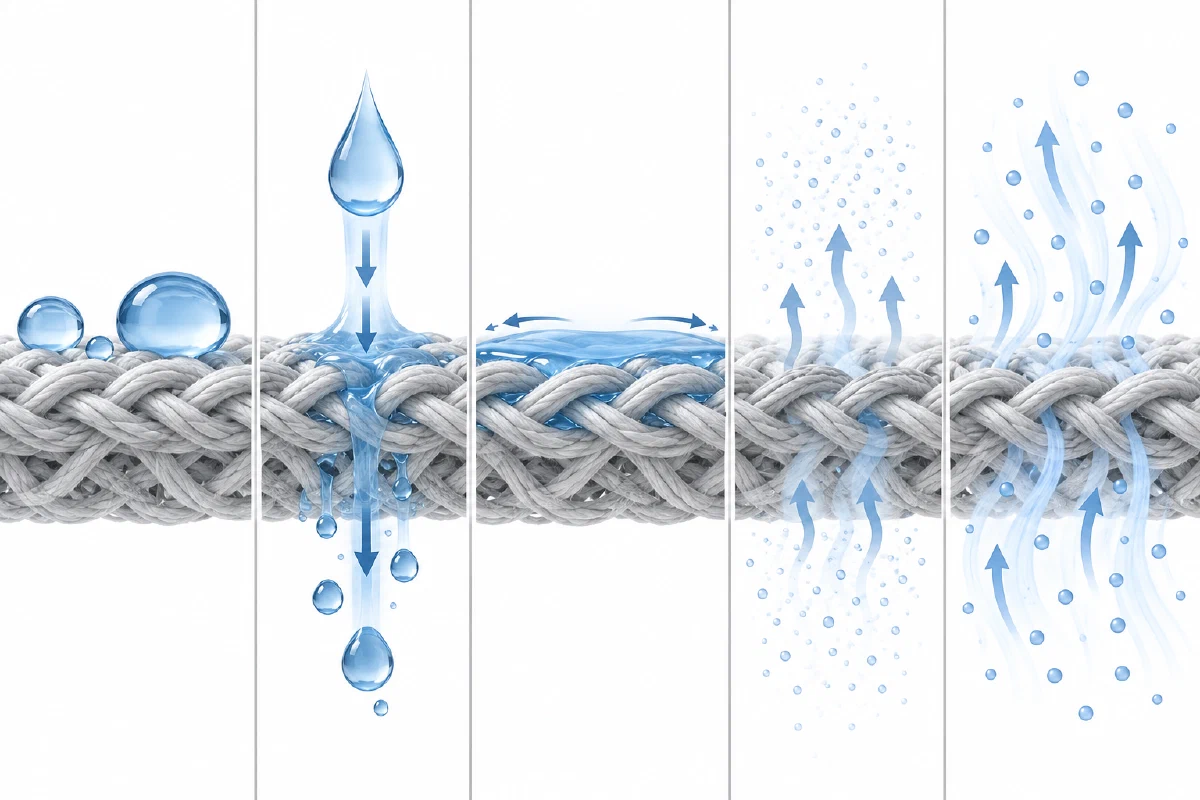
Conceptual endpoints only; the illustration does not show test ratings or a product result.
Separate the water and moisture questions#
AATCC TM22 is a spray method for surface wetting. A surface may resist visible wetting without proving resistance to water passing through it. TM127 measures resistance to penetration under hydrostatic pressure; that result is a different endpoint and can differ from spray or rain methods. Neither test, by itself, proves that a sewn seam or finished bag or garment is waterproof.
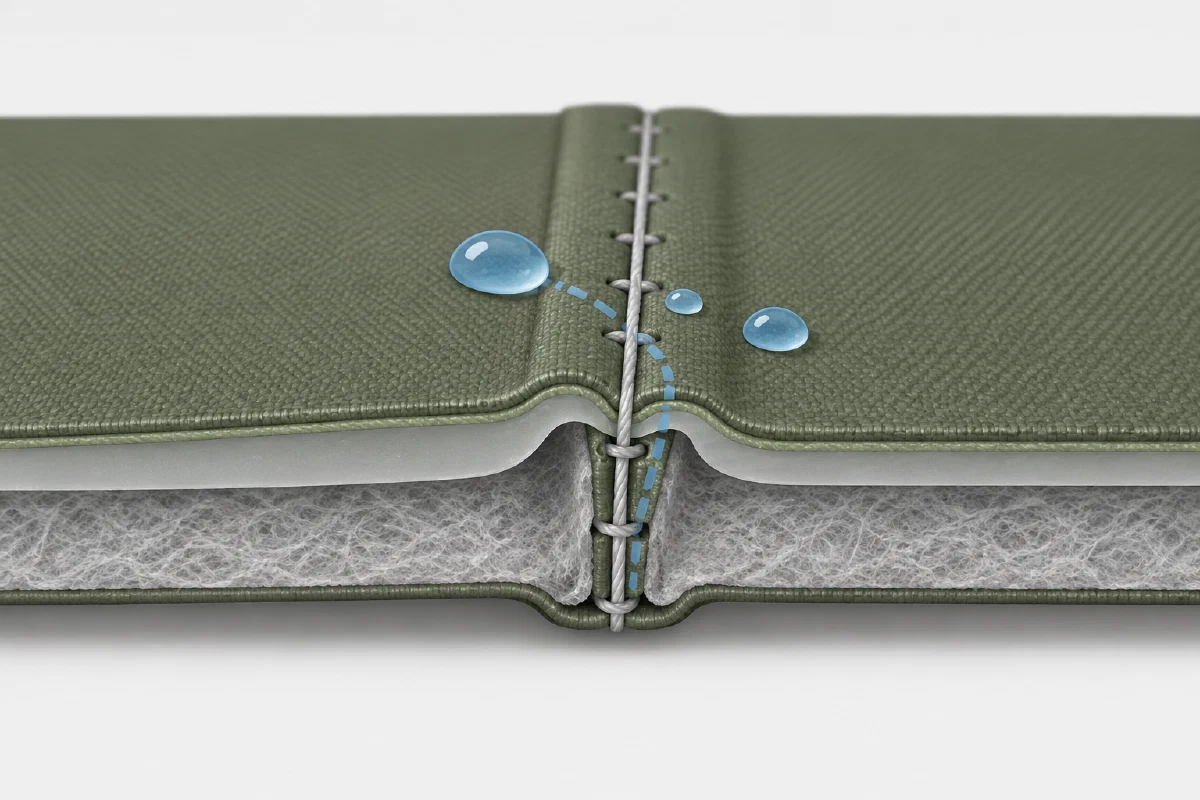
A flat-fabric test and a sewn seam are different test objects; this cutaway is not a performance result.
Liquid wicking is another behavior. AATCC TM217 assesses how liquid spreads through and across a textile specimen. AATCC TM204 measures water-vapor transmission under its stated conditions. Air-permeability testing, such as ASTM D737, measures airflow through fabric. Liquid movement, vapor transfer, and airflow are related to different use questions; none alone guarantees that a garment feels cool, dries quickly, or remains comfortable.
Read the evidence before choosing a material#
When a supplier quotes a result, record the exact product and lot, the test method and edition, units, conditioning, fabric face and direction, and whether the specimen was a fabric panel, seam, or finished item. Ask whether seams, closures, coatings, and later treatments were included. Compare numbers only when the test method, specimen, conditions, and units match; unlike endpoints cannot be ranked on one scale.
For a material intended to keep liquid out, request evidence for the actual use and construction. A fabric result does not establish how needle holes or a seam affect a barrier. For sewn alterations, follow the product maker’s instructions or a qualified repair service where a barrier must be preserved. Then use a matched scrap to assess ordinary sewing compatibility, as in the coated-material guide and waxed-canvas sample guide.