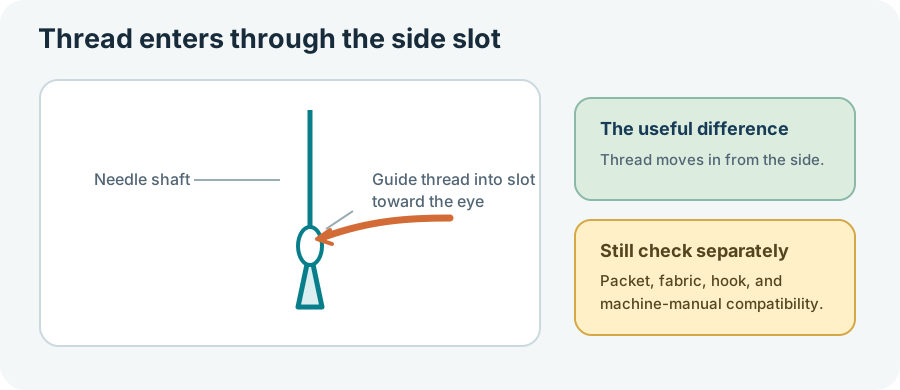
If guiding thread through a small needle eye is difficult, a side-slot self-threading needle is one option to investigate. Instead of pushing the thread end through the eye from front to back, the slot lets you guide the thread sideways into it. This feature is built into the needle; it is different from an automatic needle threader attached to a machine.
The American Sewing Guild’s needle chart lists side-slot needles for woven fabrics and describes them as helpful when threading is difficult. It gives 80/12 and 90/14 as examples. Those are chart examples, not a recommendation for every sewing machine, thread, or fabric.
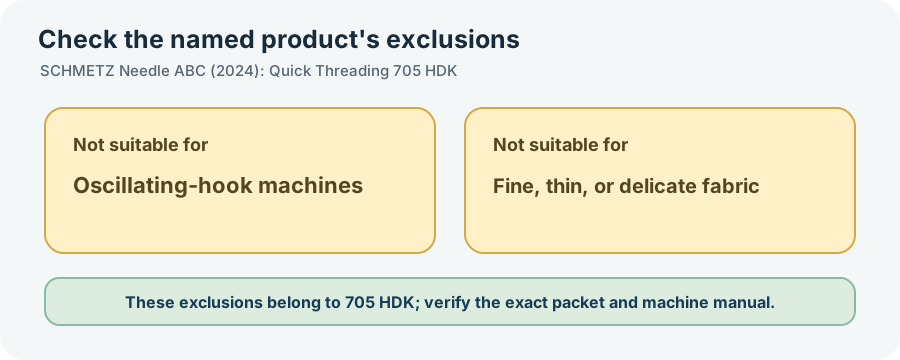
SCHMETZ’s 2024 Needle ABC describes one specific side-slot design, Quick Threading 705 HDK, in sizes 80 and 90. It says that product is not suitable for oscillating-hook machines or fine, thin, or delicate materials. Keep those exclusions attached to the named needle system; they do not establish compatibility rules for every side-slot needle. The SCHMETZ Needle ABC and packet identify the product to check.
Check the fabric and machine#
The same chart cautions that the slot may snag knit fabrics. If you are sewing a knit, do not assume that a side-slot design will behave like a ballpoint or stretch needle. Choose a needle type intended for the fabric, or test a suitable option on a scrap and look for pulled loops, snags, or damaged yarns before continuing.
Check the exact machine manual and the needle packet for the required needle system, size, and insertion direction. A side slot does not establish machine compatibility. Test the intended thread and fabric on a sample; stop if the needle catches material, strikes the foot or plate, bends, or breaks. If the machine manual does not clearly permit the needle system, ask the machine maker before installing it.
For ordinary fabric-first choices, see the needle-type selector. The needle-size guide explains why a matching size marking alone does not prove that a needle fits a machine or project.