A Hong Kong finish covers each raw seam-allowance edge with a separate bias strip while the seam remains pressed open. It finishes the inside of a garment seam; it is not the same operation as binding a quilt’s outer edge.
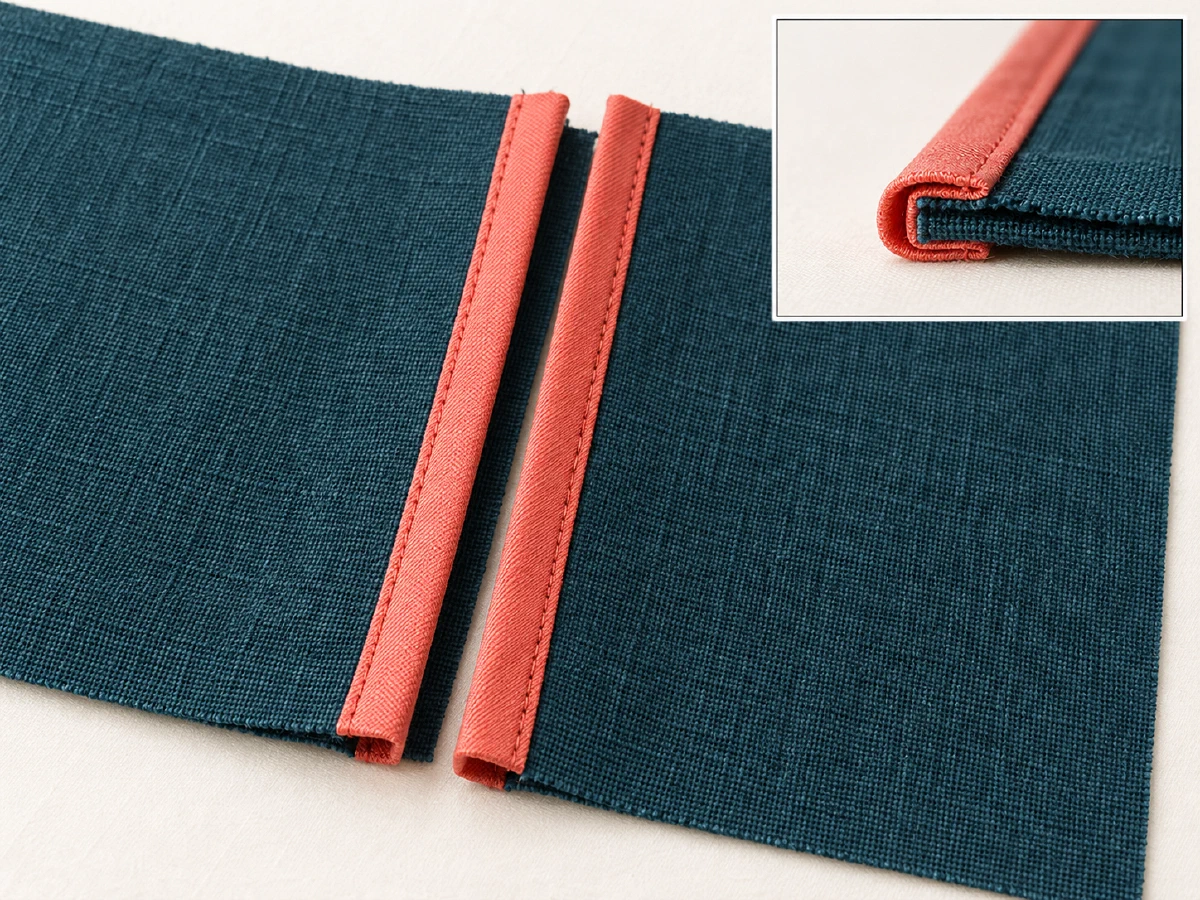
Bind the allowances separately#
First sew the garment seam and press the allowances open. Cut bias strips suitable for the fabric’s weight, care requirements, and the allowance width. The University of Kentucky Extension’s FCS2-304 example uses strips about 1 1/4–1 1/2 inches wide, attaches each strip right sides together to one allowance with a 1/4-inch seam, then folds it over the raw edge and stitches it down. Repeat for the other allowance so each side is finished independently.
The cited dimensions are source examples, not a rule for every fabric or pattern. The publication is a 2014 Extension reference and its listing warns that it was archived before April 24, 2026 and may not reflect current practice. Check current pattern and fabric-care instructions, and choose a binding that can be pressed and laundered appropriately.
Finish and sample#
After wrapping each allowance, the source example secures the underside by stitching in the ditch and trims the excess close to the stitching. Test this sequence on a scrap with the same fabric and bias. Check that the seam still opens flat, the binding fully covers each raw edge, and the inside stitching catches the fold without distorting the garment fabric.
Do not bind the two allowances together if the goal is to keep the seam pressed open. This finish adds its own layers, and no measured bulk or durability result is established here. For an enclosed seam construction, see French seams or flat-felled seams.