Both true and mock flat-felled seams can show parallel rows of stitching on the outside, but their allowances are constructed differently. Choose by the inside finish your project needs, then test the bulk and topstitching on the actual fabric.
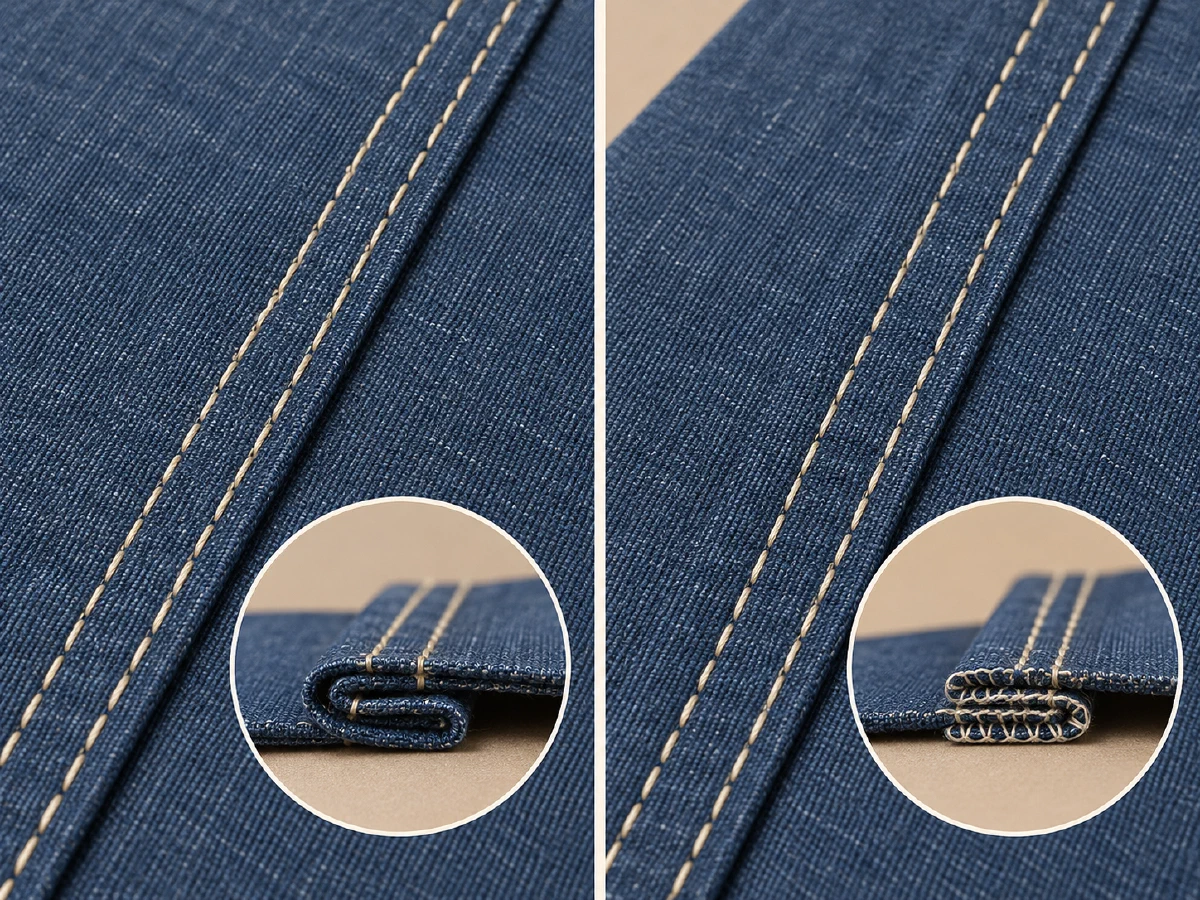
True flat-felled seam#
A true flat-felled seam folds one allowance around the other so the raw edge is enclosed. It can be made with the folded allowances facing inside or outside, depending on the design. The Sewing & Craft Alliance guide illustrates a 5/8-inch seam allowance; after the first seam, one allowance is trimmed to about 1/8 inch and the wider allowance is folded over it and stitched down. A second parallel row may be added for the selected appearance.
Those dimensions are source examples, not a universal pattern allowance. Check the garment pattern and leave enough width to form the fold. The enclosed layers add bulk, so test the actual fabric stack, needle, thread, foot, and seam crossing before starting the garment.
Mock flat-felled seam#
For the mock version in the same guide, sew a plain seam, press both allowances to one side, finish their raw edges together with a serger or zigzag, then stitch parallel rows from the outside. This can imitate the visible rows while leaving a different inside construction. It is not the same as folding one allowance around the other.
Make a sample and inspect the reverse as well as the topstitching. Confirm that the needle clears the foot and plate at thicker points; do not force the fabric over a bulky crossing. These construction names do not establish a strength comparison. For machine-specific heavy-fabric thread and needle choices, see the denim topstitching guide. A French seam encloses a raw edge with a different two-pass sequence.