A French seam encloses the raw allowances inside a second seam. It can suit lightweight or sheer woven fabric when an enclosed edge is wanted. It is a two-pass construction, so test the allowance and finished width on scraps before cutting the project.
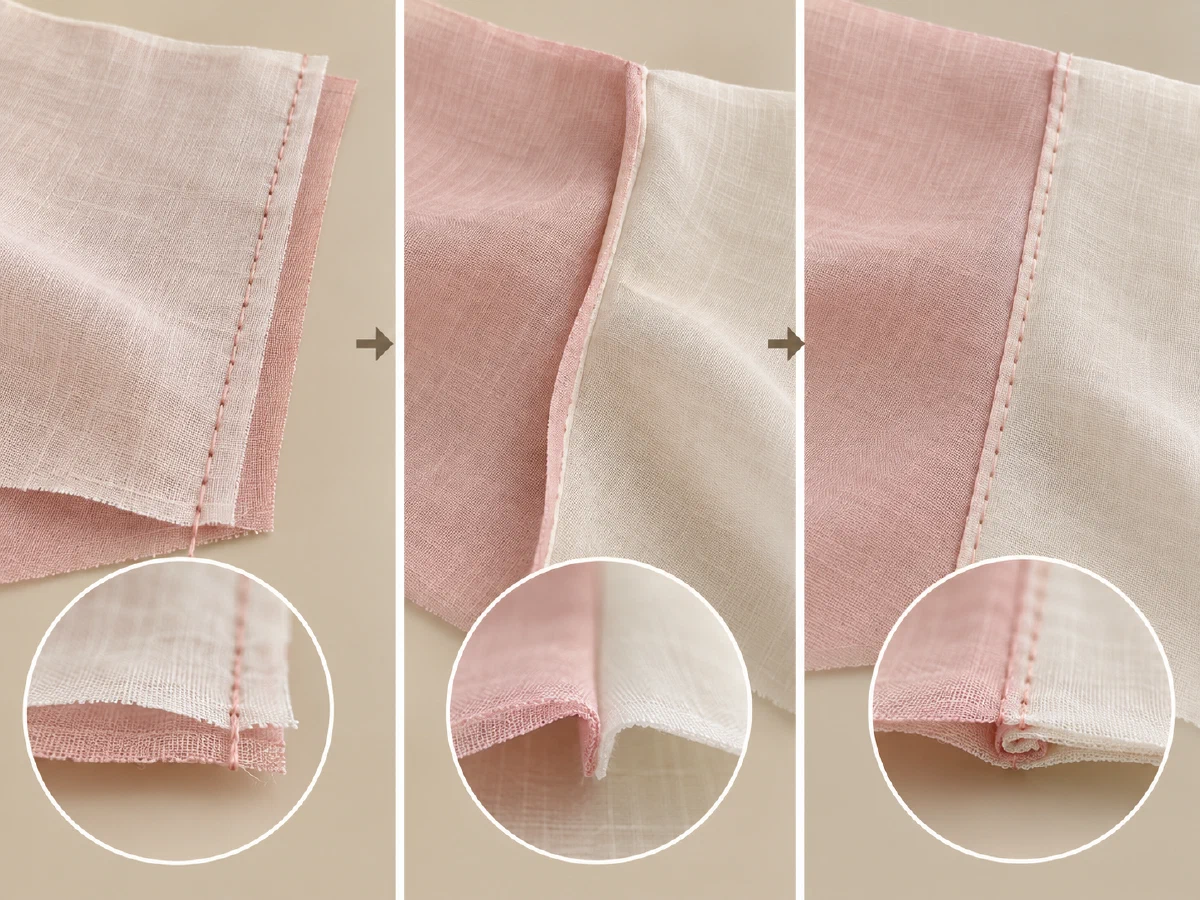
Sew the first pass#
Place the fabric wrong sides together and sew the first line near the raw edge. The University of Kentucky Extension’s FCS2-304 example begins about 3/8 inch from the edge, then trims the allowance to roughly 1/8–1/4 inch from that line. Press the first seam open, then turn the work so the right sides face each other and the trimmed edge is enclosed.
These measurements are examples from that publication, not a universal seam allowance. The best first seam depends on the pattern allowance, fabric fraying, and the width needed to contain the raw edge. The source listing identifies the publication as archived before April 24, 2026 and cautions it may not reflect current practice; treat it as a dated technique reference and follow current pattern and fabric-care directions.
Enclose and inspect the edge#
Press the folded seam, then sew the second line about 1/4 inch from the fold in the cited example. The finished seam should contain the trimmed raw edge. Check both sides of a sample for stray threads, a bulky ridge, or fabric caught outside the enclosure. If the fabric is very delicate or the seam curves, test the full shape and adjust the first-pass allowance before sewing the garment.
A French seam is a construction method, not a stitch setting or a strength rating. Use the machine’s manual for needle, thread, and controls. For a folded seam with visible parallel rows, compare true and mock flat-felled seams; for separately finished open allowances, see the Hong Kong finish.