A label can answer one question and leave several others open. Fibre content describes the stated fibres and blend; it does not by itself identify whether the fabric is woven, knit, or nonwoven, how a face is bonded to a backing, how much it stretches, or how it will feed under a needle. Before cutting, keep composition, construction, finish, and care as separate notes.
Record the actual product#
Save the maker or supplier, product name or SKU, colour or lot if available, the composition as written, and the care instructions that apply to the yardage. Look at both faces and the cut edge. If the textile has pile, a coating, a lining, or a bonded backing, ask whether that component has a different fibre content and what the product is made from.
A surface name such as “waterproof,” “bamboo,” or “suede” is not a lab result or a complete construction description.
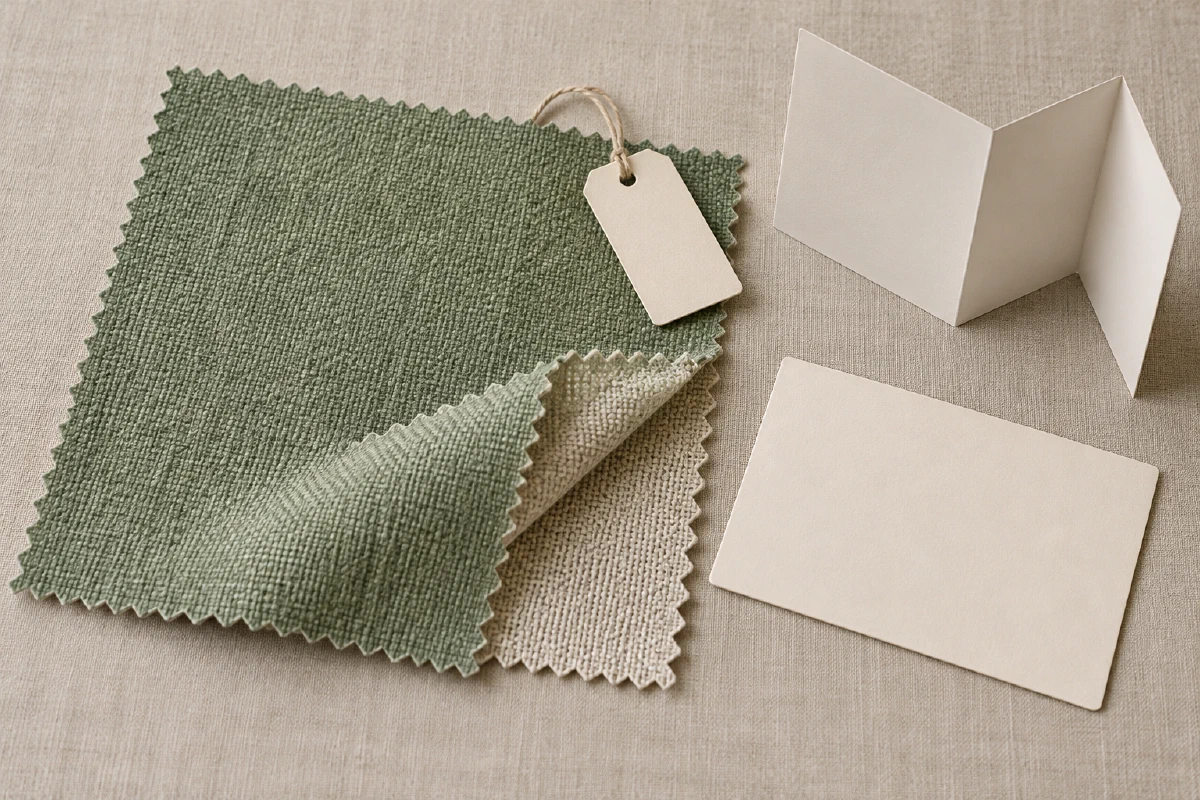
A product identifier helps keep a supplier question tied to the fabric you actually bought.
Label rules depend on the market and product. In the United States, FTC textile-fibre information and care information come from separate rules; the care rule includes a limited provision for certain defined piece goods used to make wearing apparel, not every fabric sold by length. Canadian regulations include specific disclosure options for some pile and coated or impregnated fabrics when the backing differs. GOV.UK textile-labelling guidance covers England, Scotland, and Wales; do not extend it to Northern Ireland or treat these selected examples as a complete compliance chart.
The U.S. FTC also distinguishes actual bamboo fibre from rayon or viscose manufactured using bamboo as a source. A plant-source description does not replace the manufactured-fibre name or establish antibacterial behavior. If the label is unclear, ask the supplier for the named fibre in each component rather than guessing from softness or appearance.
Use the right information for preparation#
Follow the care information for the exact fabric before washing, drying, pressing, or bonding it. Fibre content alone cannot supply a safe temperature or a shrinkage result for a finished garment made with several components. If care instructions are absent or conflict, ask the seller or maker before applying a treatment. Do not substitute a home burn test or a fibre name for product information.
Once the material is identified, choose a focused guide: compare weight, thickness, and hand, review the coated-face and backing checks, or follow the applicable wool or knit sample guidance. A label narrows the questions; a matched offcut and the machine manual still govern the seam test.